

Setting Up an English-Medium School in Sylhet
Every English-medium school in Bangladesh, from nursery to A level, must be registered under the Registration of Private Schools Ordinance 1962. The authority depends on the classes taught, and the checks cover premises, staff, fees and curriculum. This guide explains the process and the risks for founders in Sylhet, including those returning from the UK.
Key takeaways
- The 1962 Ordinance expressly covers O and A level, Cambridge, IB and nursery schools teaching ten or more children.
- The education board registers secondary and higher secondary sections; directorates handle junior and primary.
- Checks cover premises, qualified and adequately paid staff, fees, management and curriculum.
- A new school may open once it has applied, but must close if registration is refused.
- Refusals and cancellations can be appealed within 30 days.
- Wilful breach carries up to one year's imprisonment or a Tk 10,000 fine.
The legal basis for an English-medium school
An English-medium school in Bangladesh must be registered under the Registration of Private Schools Ordinance 1962. Section 3 says no private school may be established or run except in accordance with the Ordinance, and since amendments in 1989 and 2001 the definition of "private school" expressly includes O and A level, nursery, Junior and Senior Cambridge, International Baccalaureate and equivalent institutions run by private persons and teaching ten or more children at a time. Registration is granted by the "Registering Authority", which depends on the level of education the school offers.
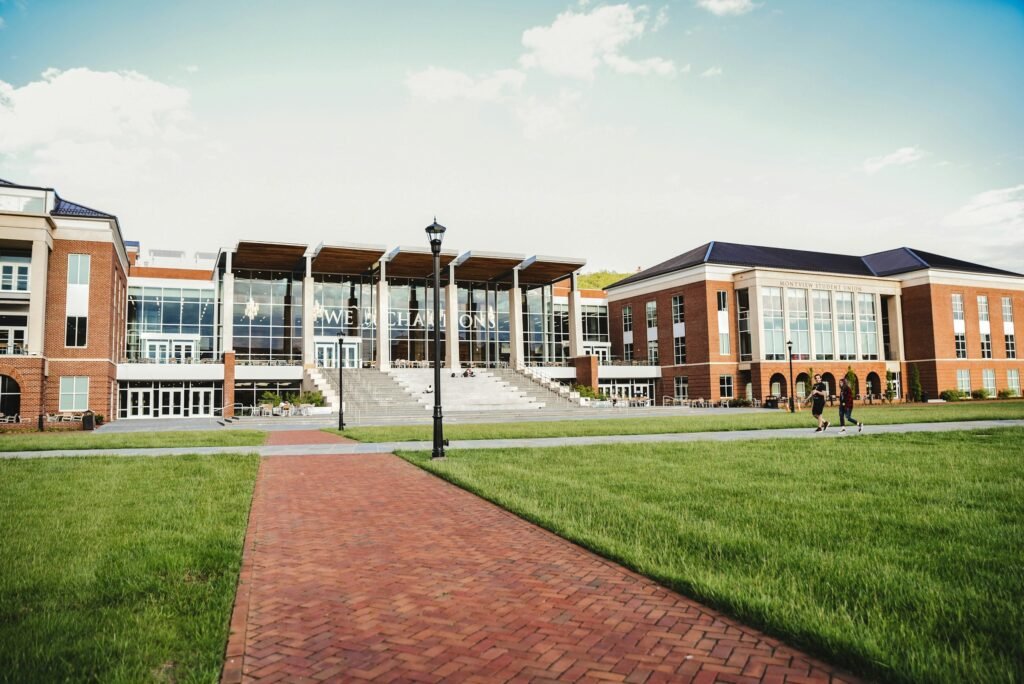
Demand for a good English-medium school in Sylhet is strong, fed partly by families who have returned from the UK or who want children ready for study abroad. Many schools are founded by returning British-Bangladeshi teachers or business families. The Ordinance is old, short and supplemented by rules and government guidelines, but its core requirements are clear and enforceable.
Who registers your school
| Level taught | Registering Authority (s.2(h)) | Appellate Authority (s.2(a)) |
|---|---|---|
| Secondary (classes IX–X, including O level) and higher secondary (XI–XII, including A level) | The concerned Board of Intermediate and Secondary Education or other prescribed authority | The government |
| Junior secondary (classes VI–VIII, including Junior Cambridge) | Directorate of Secondary and Higher Education, or an authorised Regional Deputy Director | Director General, Directorate of Secondary and Higher Education |
| Primary (classes I–V, including nursery, preparatory and kindergarten) | Directorate of Primary Education, or an authorised Divisional Deputy Director | Director General, Directorate of Primary Education |
A school that runs from playgroup to A level may therefore deal with more than one authority. For an English-medium school in Sylhet offering O and A levels, the education board with jurisdiction over Sylhet is the key regulator for the senior sections.
What the Registering Authority checks
Under section 4(2), the Registering Authority makes enquiries to satisfy itself:
- that buildings and premises provide adequate facilities, with due regard to hygiene;
- that staff are qualified, adequate in number and adequately paid according to prescribed standards;
- that fees are not disproportionate to the facilities and do not exceed prescribed limits;
- that there is no reason to believe the school will be run in an undesirable manner or by undesirable persons;
- that the school follows a curriculum approved by the concerned board or other prescribed authority; and
- that no book is prescribed which has not been approved, or published and printed, by the National Curriculum and Textbook Board.
The last two conditions sit awkwardly with schools teaching foreign curricula. In practice, English-medium schools follow rules and guidelines issued under the Ordinance that address foreign curricula and require certain national subjects, such as Bangla and Bangladesh studies. Founders should obtain the current rules and guidelines from the relevant authority and plan their curriculum accordingly, rather than assuming that a Cambridge or Edexcel syllabus alone will satisfy section 4.
If the authority is satisfied within ninety days of the application, it proceeds to register the school (section 4(3)). The holder of the certificate is personally responsible for complying with the Ordinance, the rules and the conditions of registration (section 4(5)).
Section 5(1) allows a new school to open once an application has been made, while it is pending — but it must close immediately if registration is refused. Opening early is therefore a business risk: if the application fails, parents have paid fees and children must move mid-year.
Setting up an English-medium school step by step
- Choose the vehicle. A trust, society or company. Trusts suit philanthropic projects; companies suit investors seeking returns. Either way, the person or body holding the certificate carries legal responsibility.
- Secure premises. A building that meets hygiene and safety expectations, with classrooms, toilets, play space and, for senior sections, laboratories and a library. Check the building's approval and fire safety.
- Plan curriculum and staff. Decide which examination boards you will use for O and A levels, how national subjects will be taught, and recruit qualified teachers on written contracts.
- Set fees. Prepare a fee structure linked to facilities, mindful of any prescribed limits and of section 4(2)(c).
- Apply to each Registering Authority with the prescribed form and fee, and supporting documents.
- Respond to inspection and conditions; registration may be granted subject to conditions under section 4(3).
- Register with the examination boards as a centre or through an approved centre, and obtain other local permissions such as a trade licence where required.
Documents for the application file
The prescribed forms set the formal list, but a strong file anticipates the section 4(2) enquiries. For a typical Sylhet English-medium school we would expect to see:
- the constitution of the sponsoring body (trust deed, society registration or company documents) and identity documents of those responsible;
- the lease or title of the premises, building approval, a floor plan showing classrooms, toilets and play areas, and evidence of fire safety measures;
- a staff list with qualifications, contracts and salary scales, to show staff are "qualified, adequate and adequately paid";
- the curriculum for each level, showing how national subjects are covered alongside the foreign syllabus;
- the fee schedule and the facilities it pays for;
- admission, safeguarding and complaints policies.
Presenting these clearly at the outset tends to shorten the enquiry and reduces the chance of conditions that are hard to meet later.
Running the school: compliance and risk
Registration is not the end of regulation. Under section 6, the Registering Authority may suspend or cancel a certificate for contravention of the Ordinance, the rules or the registration conditions. Section 9 makes wilful contravention an offence punishable with imprisonment of up to one year, a fine of up to Tk 10,000, or both, although prosecution requires a written complaint by an authorised officer (section 10).
Day-to-day risks for an English-medium school include:
- Fee disputes. Sudden fee increases provoke parent protests and complaints to authorities. Publish a fee policy and give notice of changes.
- Staff contracts. Teachers and non-teaching staff need written contracts. Section 1(4) of the Bangladesh Labour Act 2006 excludes only educational institutions not run for profit, so a fee-charging school run as a business should expect the Act, including its appointment letter rule in section 5, to apply to its employees.
- Child safety. Safeguarding policies, staff vetting, transport safety and anti-bullying procedures protect children and the school's reputation.
- Premises. Many schools operate in converted residential buildings. Fire exits, structural safety and crowding attract attention after incidents elsewhere.
- Founder disputes. Schools founded by friends or relatives often split over money and control. A clear trust deed or shareholders' agreement prevents most of these.
Illustration (hypothetical)
A teacher who worked in east London for fifteen years returns to Sylhet and opens an English-medium school in a rented house, starting with playgroup to class five, then adding O level classes. She applies for primary registration but does not realise that the senior classes need registration with the education board. When a parent complains about fees, the board finds the O level section unregistered. The school must apply immediately and faces the risk of being told to stop the senior classes until registration is granted. Mapping every section of the school against the correct Registering Authority at the planning stage would have avoided the problem, and would have given parents confidence that each stage of their children's education was lawfully provided.
Nurseries, fees and parent contracts
Nurseries and day-care
The Ordinance defines a "nursery" to include child-care, day-care, mother-care or any other centre, by whatever name, educating children up to six years old, and "primary education" includes nursery, preparatory and kindergarten courses. "Children" means boys and girls above four and below eighteen receiving instruction. A playgroup attached to an English-medium school, or a stand-alone kindergarten, therefore needs to consider registration with the primary education authorities once it teaches ten or more children at a time. Founders who start with a small playgroup and grow should check the position as numbers rise.
Fees and admissions
Section 4(2)(c) links fees to facilities and to any prescribed limits. Fees are also the most common source of conflict with parents. A written fee policy should state tuition, admission and session charges, what each covers, when they are payable, the refund rules if a child leaves, and how increases are decided and notified. Admission criteria, including any test or interview, should be published and applied consistently.
Parent terms
A short parent contract, signed at admission, records the fee policy, behaviour and attendance expectations, the school's safeguarding and complaints procedures, consent for photographs and trips, and how personal data about children is handled. Under the Personal Data Protection Act 2026, data about children generally requires a parent's or guardian's consent, so the admission form is the natural place to obtain it.
Foreign curricula and examinations
The Ordinance's definitions show how far the law has adapted to international education. "Secondary education" includes O level of any foreign educational institution and its equivalent; "higher secondary education" includes A level equivalents; and "private school" names the International Baccalaureate expressly. Registration under the Ordinance concerns the school's right to operate in Bangladesh. Separately, the examination boards in the UK or elsewhere decide whether the school can teach and enter candidates for their qualifications, and each has its own approval process.
Families returning from abroad should also ask about equivalence: Bangladeshi universities and employers may require O and A level results to be converted to national equivalents through the education boards, and the school should be able to guide parents on that process.
Exemptions and recognised schools
Two further provisions are worth knowing. Institutions recognised by the government or an education board fall outside the definition of "private school" altogether. And section 11 allows the government to exempt a class of private schools, or an individual school on application, from the Ordinance. Exemptions are uncommon, discretionary and decided case by case; an English-medium school should plan on full registration rather than hoping for one.
How TRW & Co helps
We help founders set up and register an English-medium school in the Sylhet division: choosing the structure, drafting trust deeds or shareholders' agreements, reviewing leases and premises, preparing applications to the education board and directorates, and drafting staff contracts and parent terms. We also act in disputes with parents, staff or co-founders, and on appeals against refusal or cancellation within the 30-day limit in section 7. Our Sylhet office is at Surma Tower, opposite the Judge Court; returning or overseas founders can instruct us by email at info@trw.co. See private education, health and education, returning to Sylhet and our note on private universities. To discuss a project, contact us.
Primary text: Registration of Private Schools Ordinance 1962.
Frequently asked questions
Does an English-medium school need registration in Bangladesh?
Yes. Section 3 of the Registration of Private Schools Ordinance 1962 bars establishing or running a private school except in accordance with the Ordinance, and the definition expressly includes O and A level, nursery, Cambridge and International Baccalaureate institutions teaching ten or more children. Schools recognised by the government or an education board are outside the definition.
Which authority registers an English-medium school in Sylhet?
It depends on the classes. Secondary and higher secondary sections, including O and A levels, are registered by the concerned Board of Intermediate and Secondary Education. Junior secondary sections are registered by the Directorate of Secondary and Higher Education, and primary and nursery sections by the Directorate of Primary Education, or their authorised regional officers.
Can we open before registration is granted?
Section 5(1) allows a new school to be established and run once an application has been made, until it is decided, but the school must close immediately if registration is refused. That is a real risk for parents and the business, so many founders prefer to wait for the certificate or open small.
What happens if a school operates without registration?
The authorities can order it to stop, and wilful contravention of the Ordinance, the rules or registration conditions is punishable under section 9 with imprisonment of up to one year, a fine of up to Tk 10,000, or both. Prosecution requires a written complaint by an officer authorised by the government.
Can we teach a purely British curriculum?
Section 4 refers to curricula approved by the education board and to textbooks approved by the National Curriculum and Textbook Board. In practice, English-medium schools follow rules and guidelines that accommodate foreign curricula but require national subjects such as Bangla. Obtain the current requirements from the authority before finalising your curriculum.
Sources
General information only, not legal advice. References to statutes, courts and authorities describe published law and practice at the date shown.
 Tourism, health and education
Tour Operator Liability for Accidents in Bangladesh
Tour operator liability in Bangladesh rests on a clear statutory duty: section 11 of the 2021 Tour Operators and Tour Guides Act requires operators to compensate… 8 min read
 Tourism, health and education
Private University Permission Under the 2010 Act
No private university can be established or run in Bangladesh without government permission under the Private University Act 2010. Founders first obtain a seven-year temporary permission,… 8 min read
 Tourism, health and education
Patient Records, Consent and Confidentiality in Bangladesh
Patient consent in Bangladesh draws on the Penal Code's good-faith consent rules and, since 2026, on the Personal Data Protection Act's treatment of health data as… 8 min read