

Guide · Land, Property and Title in Sylhet
Land Due Diligence in Sylhet: Checking Title Before You Buy
Land due diligence in Sylhet means proving that the seller owns the land, that the papers match the ground, that nobody else has a claim and that you can use the land as planned. This guide explains the survey records, the searches, the warning signs and the special categories of land in the division.
Key takeaways
- A registered deed alone does not prove title; trace ownership through CS, SA, RS and BS records.
- Sellers need the latest khatian and paid land tax before they can sell or register.
- Co-sharers by inheritance can claim a sold share within two months of notice or knowledge.
- Haor, agricultural, khas and tea estate land carry extra legal restrictions.
- Tie payments to registered milestones rather than paying a relative or broker in advance.
What land due diligence in Sylhet must prove
Land due diligence in Sylhet has to prove four things before any money changes hands: that the seller actually owns what is being sold, that the land on the ground is the land in the papers, that nobody else has a competing claim, and that the law allows you to use the land as you intend. A registered deed in the seller's hands answers only part of the first question. The rest comes from the survey records, the sub-registry volumes, the land office, the courts and a site visit.
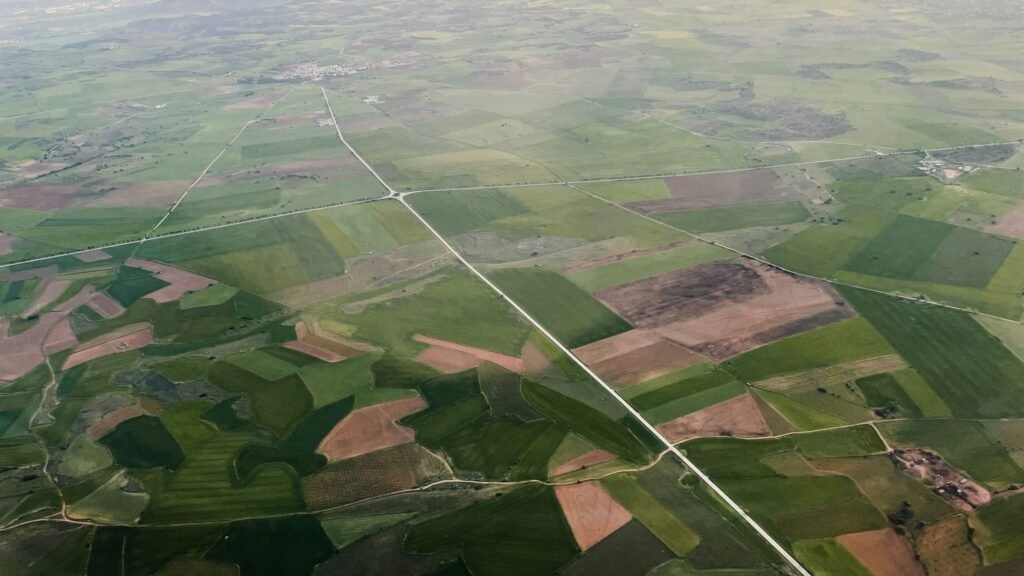
The stakes are high because of how land is held in the division. Plots have often passed through several generations by inheritance without a registered partition; many owners live abroad and act through relatives; and survey records from different decades do not always agree. Since 2023 the law also blocks sales where the seller lacks an up-to-date khatian and land tax receipt, so a weak file will often fail at the sub-registry even if the seller is honest.
This guide sets out how we approach a title review, the searches involved, the red flags that should stop a purchase, and the special categories of land in greater Sylhet that need extra care. It complements our overview of land and property in Sylhet.
Reading the survey records: CS, SA, RS and BS
Bangladesh land records were built through successive surveys, each producing a record-of-rights (khatian) and a mouza map. A thorough review follows a plot through each of them.
| Record | What it shows | What to look for |
|---|---|---|
| CS (Cadastral Survey) khatian | The oldest detailed record for most mouzas. | The original owner or tenant from whom later titles descend. |
| SA (State Acquisition) khatian | The record prepared after the State Acquisition and Tenancy Act 1950 abolished zamindari. | Whether the holding passed to the expected family, or was recorded as khas. |
| RS (Revisional Survey) khatian | A later revision correcting and updating the SA record. | Changes in names, shares or plot boundaries, and the reasons for them. |
| BS (Bangladesh Survey) khatian | The most recent survey record in areas where it has been completed and published. | Whether the seller or the seller's predecessor is correctly recorded. |
| Mutation khatian | The record as updated by the AC (Land) after transfers and inheritance. | That the seller's own share has been mutated, not just a parent's. |
Plot numbers change between surveys, so a dag number in a 1960s deed will rarely match a recent khatian. Matching old and new plot numbers requires comparing mouza maps, sometimes with the help of a surveyor. Where survey stages are incomplete or a draft record has not been finally published, the review should say so plainly and adjust the risk assessment.
An entry in a record-of-rights prepared or revised under section 144 of the State Acquisition and Tenancy Act 1950 is presumed correct until proved otherwise (section 144A). That presumption helps an owner whose name appears, but it can be displaced by evidence, so a recorded name is a strong starting point rather than the end of the inquiry.
The searches, step by step
Every file is different, but land due diligence in Sylhet usually follows the sequence below. Doing the steps in order avoids paying for searches on land that should have been rejected at an earlier stage.
- Collect the seller's documents. Ask for all deeds in the chain, the latest khatian, mutation orders, the online dakhila (land tax receipt), any partition deed, inheritance documents and the seller's national identity card.
- Build the chain of title. Trace ownership back through the deeds and survey records, ideally for at least 25 years and as far as the records allow. Section 52A of the Registration Act 1908 requires a sale deed to include a brief description of ownership over the last 25 years, so the seller will need this anyway.
- Obtain certified copies. Do not rely on photocopies supplied by the seller. Certified copies of deeds come from the sub-registry or record room; certified copies of khatians and maps come from the land administration.
- Search the registration indexes. Check the sub-registry indexes for later transfers, mortgages, agreements for sale and powers of attorney by the seller or predecessors.
- Check the land office. Confirm mutation status and tax payment with the union land office and the AC (Land), and ask whether any mutation objection or record-correction case is pending.
- Search the courts. Check the civil courts for title, partition and injunction suits, and ask about criminal complaints involving the land. Court searches in Sylhet depend partly on cause lists and registers, so local enquiry matters.
- Inspect and measure. Visit the site with a surveyor, compare boundaries with the mouza map, and speak to neighbours about possession and access.
- Check use restrictions. Confirm whether the land is recorded as agricultural, haor, khas, vested or forest land, and whether building approval is available.
Mortgages, agreements and powers of attorney
Ownership is not the only thing a registry search should reveal. A seller may have mortgaged the land to a bank, signed a registered agreement for sale with another buyer, or given a relative an irrevocable power of attorney to sell or develop it. Each of these can survive a later sale. Bank mortgages in particular matter because a lender can enforce its security through the Artha Rin Adalat (money loan court), and a buyer who takes land subject to an undischarged mortgage inherits that problem. Ask the seller directly, search the indexes for the seller and immediate predecessors, and require written release documents from any lender before completion.
Powers of attorney deserve particular attention in a division where so many owners live abroad. Under the Power of Attorney Act 2012, an irrevocable power of attorney for sale, mortgage or land development must be registered. A general power of attorney can be revoked by thirty days' notice by registered post. Land due diligence in Sylhet should therefore confirm not only that an attorney was appointed, but that the authority covers this particular transaction and has not been revoked.
Under section 6(3) of the Land Crimes Prevention and Remedy Act 2023, a person without the latest khatian in their name and proof of up-to-date land development tax cannot sell, gift or register a deed for the land. If the seller's khatian is still in a parent's name, the seller must first complete inheritance steps and mutation. Build that time into the deal rather than accepting a promise to sort it out after payment.
Red flags in land due diligence in Sylhet
Some problems can be cured before completion; others mean the purchase should not go ahead. The distinction depends on the facts, but the following warning signs come up repeatedly.
| Warning sign | Why it matters | Typical response |
|---|---|---|
| Khatian in a deceased owner's name | The seller's share is not yet recorded; other heirs may not agree. | Require heirship proof, a registered partition and mutation first. |
| Area in the deed exceeds the recorded share | The seller may be selling more than they own. | Reduce the area or reject. |
| Recent power-of-attorney sale | Authority may have been exceeded or revoked. | Inspect the power of attorney, its registration and any revocation notice. |
| Co-sharers by inheritance not consulted | A pre-emption application may follow. | Consider obtaining their written consent or buying the whole holding. |
| Someone else in possession | Possession disputes are slow and costly. | Clarify the basis of possession before paying anything. |
| Land recorded as khas or vested | The state may claim the land. | Obtain the case history and any release order. |
| Tax arrears over several years | A penalty is payable, and the sale may be blocked until arrears are cleared. | Make clearance a condition of the deal. |
Pre-emption in practice
When a share of a holding is sold to an outsider, section 96 of the State Acquisition and Tenancy Act allows a co-sharer by inheritance to apply to the court to buy that share. The application must be made within two months of notice of the sale or, without notice, within two months of learning of it, and in any case within three years of registration.
The applicant must deposit the price, compensation of 25 per cent and simple interest at 8 per cent a year. A buyer who acquires a share in a jointly inherited holding without considering these co-sharers is taking a real risk of losing the land, although with the money returned.
Special categories of land in greater Sylhet
Several kinds of land in the division need more than a standard title review.
- Haor and wetland plots. The Bangladesh Haor and Wetland Conservation Act 2026 prohibits illegal filling, excavation and conversion of haors, wetlands and kanda land, and development projects in haor areas need the opinion of the Department of Haor and Wetland Development. Land that is dry in winter may be under water for months.
- Agricultural land for building. The Land Use Control and Agricultural Land Protection Act 2026 restricts non-agricultural use of multi-crop land and prohibits changing the recorded class of land without approval. If you plan to build, check this before you buy.
- Tea estate and plantation land. Much tea land is government land held on lease, which cannot be bought freehold from the lessee. See our page on tea estate land leases.
- Khas, vested and acquired land. Government claims must be cleared from the record before purchase. Our guide to khas, haor and government land explains the main categories.
- Apartments. Buying a flat requires checking the land, the developer's authority and the building approval. See apartments and real estate development.
Illustration: a purchase on the edge of the city
Illustration (hypothetical): Rahima, who lives in Leeds, agrees in principle to buy ten decimals of land on the edge of Sylhet city from two brothers. Their father died ten years ago. The brothers show a registered deed in their father's name and a recent dakhila.
Land due diligence in Sylhet in this case quickly identifies three issues. First, the latest khatian is still in the father's name, and the father had five heirs, not two; the sisters have not agreed to sell. Second, the land is recorded as agricultural, and Rahima plans to build a house. Third, the sub-registry index shows that one brother signed an agreement for sale with a neighbour three years ago.
The sensible course is for Rahima to pause. The heirs would need to execute and register a partition deed and complete mutation; the neighbour's agreement must be investigated; and the use question must be checked against the 2026 land use law.
Only once those steps are complete should a registered agreement for sale be signed, with the deposit kept modest and conditions tied to each step. A rushed purchase here would have bought a dispute rather than a building plot. The cost of the review is small compared with the cost of a partition suit or a pre-emption case brought by the sisters after registration, and the review also gives Rahima a clear list of conditions to put into the agreement.
Buying from abroad without losing control
Many buyers in Sylhet live overseas. Land due diligence in Sylhet can be done for them almost entirely by a lawyer and surveyor on the ground, with documents scanned and explained by email. The decision points should stay with the buyer: approving the title report, agreeing the price and conditions, and authorising payment. Where the buyer cannot attend registration, a narrowly drafted power of attorney is the usual tool. Our page on powers of attorney from abroad explains how these are executed and authenticated, and the NRB property checklist lists the documents to gather.
Avoid paying the full price to a relative or broker before registration. Payment should be tied to milestones: a small deposit on a registered agreement for sale, and the balance at registration of the sale deed, ideally by banking channels that leave a clear record.
What a good title report contains
Whoever carries out land due diligence in Sylhet for you, insist on a written report rather than a verbal assurance. At a minimum it should identify the land by district, upazila, mouza, plot number and area; list the documents examined and whether they were certified copies; set out the chain of title with any gaps; record the mutation and tax position; summarise registry, land office and court searches; describe the site inspection; and flag any use restrictions.
It should end with a clear conclusion and the conditions that must be met before you pay the balance. A report like this is also useful later, when you sell, mortgage or divide the land among your own heirs.
How TRW & Co helps
We carry out land due diligence in Sylhet for individual buyers, families abroad, developers and lenders. From our office at Surma Tower, opposite the Judge Court, we obtain certified copies of deeds and survey records, search the registration indexes, land offices and court registers, coordinate site inspections with surveyors and produce a written title report that explains each risk in plain English.
Where problems can be fixed, we set out the steps, from partition deeds and mutation to clearing tax arrears, and draft the agreement for sale with conditions that protect your deposit. We then handle registration of the sale deed and the follow-up mutation. Clients abroad can instruct us by email at info@trw.co and receive the report and documents electronically. Contact us to discuss a purchase.
Frequently asked questions
How far back should a title search go?
As far as the records reasonably allow. Section 52A of the Registration Act requires a sale deed to include a brief description of ownership over the last 25 years, so 25 years is a practical minimum. In Sylhet we usually trace a plot back through the BS, RS, SA and, where available, CS records to see how the seller's title arose and whether any break in the chain needs explaining.
Can I rely on photocopies the seller gives me?
No. Photocopies can be altered and may not show later changes. Obtain certified copies of deeds from the sub-registry or record room and certified copies of khatians and maps from the land administration. Compare them with the seller's originals and the online records, and investigate any difference before you sign anything.
What is the biggest risk when buying inherited land?
That the seller does not have the right to sell the whole plot. Where land passed by inheritance and was never formally partitioned, every heir has a share. The seller may need a registered partition deed and mutation into their own name first. Co-sharers by inheritance can also apply to buy a share sold to an outsider.
Does a clean khatian mean the land is safe to buy?
It is a strong start but not a guarantee. A khatian entry is presumed correct until disproved, yet it may not reflect recent transfers, mortgages, agreements for sale or pending suits. You still need registry index searches, court enquiries, a site inspection and a check of use restrictions.
How long does due diligence take?
It depends on the plot's history and how quickly offices supply certified copies. A simple plot with a clean recent record can be reviewed fairly quickly, while inherited land with gaps between survey records takes longer. We agree a scope and keep you informed, but we cannot promise a fixed timetable for government offices.
Sources
General information only, not legal advice. References to statutes, courts and authorities describe published law and practice at the date shown.