

Hub · Sectors in the Sylhet Economy
Sectors in the Sylhet Economy
The main sectors in Sylhet, from tea and stone to tourism, clinics and remittance-funded property, each come with their own regulators, licences and disputes. This hub maps the legal issues sector by sector and links to detailed guidance for investors, owners and diaspora families.
Key takeaways
- Remittance-funded real estate is governed by the Real Estate Development and Management Act 2010.
- Most tea estates are on Government leases, making renewal and land-use restrictions central.
- Sylhet has no seaport; trade runs through land ports such as Tamabil and Osmani airport cargo.
- Hotels, clinics and schools each need sector-specific registration or licences.
- The 2026 Labour Act amendments affect employers in every sector.
Why the main sectors in Sylhet need their own legal map
The legal questions a business faces depend heavily on what it does. A tea estate manager worries about lease renewals and plantation labour rules; a hotel owner about registration, licences and festival-day rosters; a stone importer at Tamabil about customs valuation; a diaspora family about whether the developer building their flat is registered. This hub page brings together the main sectors in Sylhet and points to the detailed guidance we publish on each. It is designed for investors deciding where to put money, for owners who already run a business in the division, and for families abroad who fund businesses and property at home.
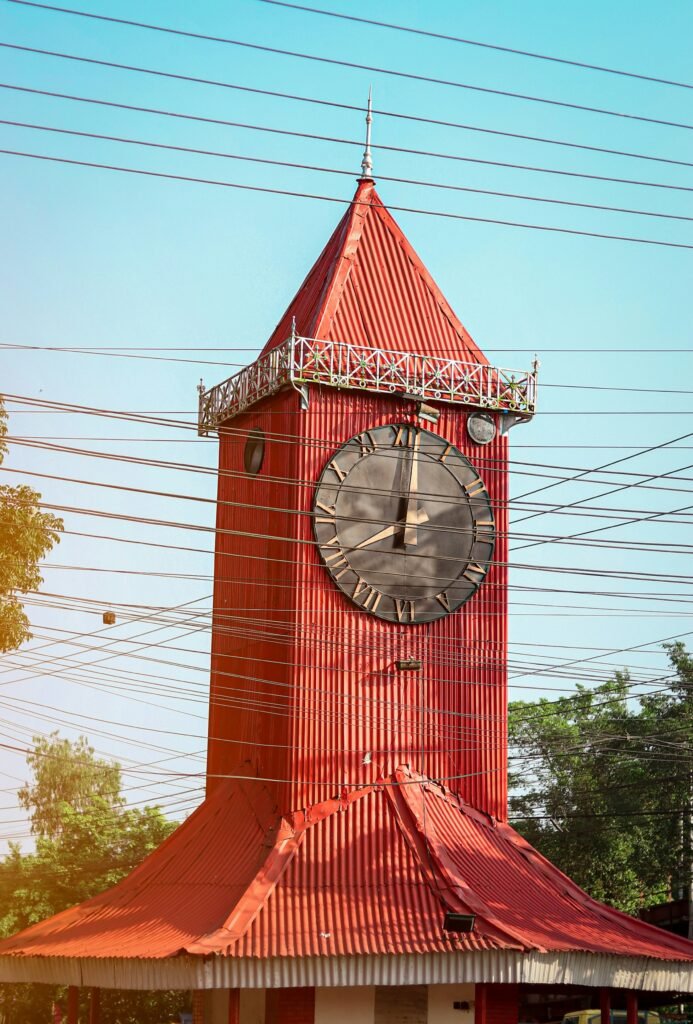
Sylhet Division, made up of the Sylhet, Moulvibazar, Habiganj and Sunamganj districts, has an economy unlike any other part of Bangladesh. It holds most of the country's tea estates, significant gas fields, stone and sand deposits along the rivers that flow in from India, haor wetlands with fisheries and seasonal farming, land ports on the Indian border, a busy domestic tourism circuit and, above all, a large diaspora whose remittances fund property, businesses, schools and clinics. Each of these sectors in Sylhet has its own regulators, licences and typical disputes.
How to use this hub
Each sector page summarises the legal landscape for that part of the economy and links onward to our practice pages, which go deeper into specific laws and procedures, and to shorter insights on individual questions. If you are new to a sector, start with the sector page; if you already know the issue, such as a lease renewal, a customs dispute or a clinic licence, go straight to the practice page. The tables below are a quick way to find the right starting point.
The sectors in Sylhet at a glance
| Sector | Typical legal issues | Sector page | Detailed practice pages |
|---|---|---|---|
| Real estate and construction | Developer registration, joint ventures, flat purchases, building approval, contractor disputes | Real estate and construction | Land, property and title |
| Remittance economy and diaspora investment | Structuring ownership, powers of attorney, banking channels, repatriation, family disputes | Remittance economy | Londoni and NRB clients |
| Tea and agriculture | Estate leases, Tea Board licensing, plantation labour, agarwood, fisheries and haor farming | Tea and agriculture | Tea estates and agribusiness |
| Energy and minerals | Gas field contracts and land, stone and sand restrictions, environmental clearance, power projects | Energy and minerals | Energy, natural resources and environment |
| Trade and logistics | Land ports, import and export registration, customs disputes, border trade, air cargo | Trade and logistics | Cross-border trade and logistics |
| Health and education | Clinic licensing, negligence, school registration, private university permission, trusts | Health and education | Tourism, hospitality and health |
| Tourism and hospitality | Hotel registration and licences, tour operator registration, tourist zones, resort land | See tourism pages | Hotels and resorts |
Property, construction and the remittance economy
The single biggest driver of activity across the sectors in Sylhet is remittance money invested in land and buildings. Apartment blocks in Sylhet city are typically built under joint venture agreements between landowning families and developers, and the Real Estate Development and Management Act 2010 sets the ground rules. Developers must register before doing business (section 5); a joint venture agreement must be in writing and fix the developer's share and timetable (section 10); after full payment, a buyer is entitled to possession and a registered deed within three months (section 9); and a developer who is late must refund with compensation, which defaults to 15% of the money paid if the contract is silent (section 15).
Planning control in and around the city is changing: the Sylhet Development Authority Act 2023, brought into force by notification according to the official text, provides for master planning and development clearance, and a national building regulatory authority was created by statute in 2026.
Remittance-funded investment also creates characteristic risks: property in a relative's name, informal family agreements, inheritance disputes among co-sharers in several countries, and powers of attorney that are too wide. Our real estate and construction and remittance economy pages explain how to structure and protect these investments, and the NRB property checklist provides a practical starting point.
Shops, offices and commercial leases
A large share of commercial activity in Sylhet city takes place in rented shops and offices in market complexes, often owned by diaspora families. Lease terms, advance payments, rent increases and eviction are recurring sources of dispute. Written, registered leases where the law requires registration, clear provisions on advance and its return, and a defined process for rent review and termination protect both owners and tenants. See commercial leases and tenancy and our insight on shop leases in Sylhet city.
Tea, agriculture, energy and minerals
Tea and agriculture
Tea is the division's signature industry, concentrated in Moulvibazar, Habiganj and Sylhet districts. Most estates are held on long-term Government leases, so lease terms, renewal and restrictions on converting garden land to other uses are central legal issues. Tea production, processing and trade are regulated through the Tea Board under the Tea Act 2016, and tea garden workers have specific protections under the Bangladesh Labour Act 2006, including separate leave rules and a dedicated provident fund. Beyond tea, agarwood, citrus and pineapple orchards, haor rice farming and fisheries (including jalmahal leases of public water bodies) each raise their own licensing and land questions. See tea and agriculture in Sylhet.
Energy and minerals
The division hosts several of Bangladesh's gas fields, some operated by state companies and others under production sharing contracts with international operators. Contractors, landowners affected by pipelines and wells, and suppliers all deal with the state energy sector's procurement and compensation rules. Stone and sand extraction along the rivers at Jaflong, Bholaganj and elsewhere has been the subject of court orders and government restrictions, and quarry leasing, crushing and transport are closely regulated. Environmental clearance from the Department of Environment is required for many projects. See energy and minerals in Sylhet.
Power and renewable energy are a smaller but growing part of the picture, from rooftop solar on factories and hospitals to larger generation projects. These involve power purchase arrangements, land and environmental approvals, and, for rooftop systems, net metering rules. See power and renewable energy projects.
Haors, fisheries and seasonal farming
The haor basin in Sunamganj and parts of Habiganj and Moulvibazar supports boro rice farming in the dry season and fisheries when the water rises. Public water bodies are leased as jalmahals through the local administration, and disputes over fishing rights in beels are common. Flash floods can destroy a season's crop in days, so contracts for inputs, purchase and credit should deal with crop loss. Wetland protection, including at Tanguar Haor, limits what can be built or done in some areas. See fisheries, jalmahal and haor agriculture.
In tea, quarrying and haor-based businesses, the question "who owns this land or water?" often has a different answer from what local people assume. Government leases, khas land, jalmahals and protected areas are common. Check the record-of-rights and the lease or permit before investing, not after.
Trade, tourism, health and education
Trade and logistics
Sylhet has no seaport. Its cross-border trade runs through land ports and land customs stations on the border with India, notably Tamabil opposite Dawki in Meghalaya, and air cargo moves through Osmani International Airport. Coal, stone and limestone imports and a range of exports pass through these routes. Importers and exporters need IRC or ERC registration, and disputes commonly involve customs valuation, classification, seizures and contracts with clearing and forwarding agents. See trade and logistics in Sylhet.
Logistics and transport contracts
Behind the trade sector sit trucking firms, clearing and forwarding agents, warehouse operators and cold-chain providers for perishables flown out of Osmani airport. Their contracts allocate the risk of loss, damage and delay, and are often informal. A short written agreement covering responsibility for goods in transit, insurance, payment terms and liability caps prevents many disputes.
Tourism and hospitality
Domestic tourism has grown rapidly around Sreemangal's tea gardens, the haors of Sunamganj, Ratargul, Jaflong and Lalakhal. Hotels with ten or more bedrooms, including resorts and guest houses, and restaurants seating 30 or more need registration and a licence under the Bangladesh Hotel and Restaurant Act 2014; licences last three years. Tour operators and guides need registration under the Tour Operators and Tour Guides Act 2021. Resort projects frequently run into land classification and environmental constraints. See hotels and resorts and tour operators and tourism businesses.
Health and education
Private clinics and diagnostic centres need a licence from the Director General of Health Services under the Medical Practice and Private Clinics and Laboratories (Regulation) Ordinance 1982, which sets minimum conditions on floor space, equipment and staffing. Private schools that are not recognised by an education board, including English-medium schools, need registration under the Registration of Private Schools Ordinance 1962, and private universities need Government permission under the Private University Act 2010. Diaspora families fund many of these institutions, often through trusts. See health and education in Sylhet.
Issues common to all sectors in Sylhet
Whatever the sector, certain legal themes recur. We see them in almost every engagement, and they are worth checking at the outset of any investment or dispute.
| Theme | Why it matters across sectors | Where to read more |
|---|---|---|
| Land and title | Every business sits on land; title defects, unmutated inheritance and khas or lease land undermine investments | Land due diligence |
| Business structure | Proprietorships and informal partnerships struggle with succession, finance and disputes | Business and investment |
| Employment | The Labour Act, as amended in 2026, applies across tea, hospitality, health, construction and trade | Employment and people |
| Environment | Clearance, wetlands, hills and rivers affect tourism, quarrying, industry and construction | Environmental clearance |
| Disputes and courts | Civil suits, injunctions, money recovery, cheque cases and arbitration are used in every sector | Disputes and courts |
| Diaspora ownership | Remote owners need structures, documented funding and reliable local authority | Londoni and NRB clients |
Tax and VAT across sectors
Every sector carries tax obligations, but they differ. Hotels, restaurants and many service businesses collect VAT; importers pay customs duties and advance taxes at the border; employers deduct tax from salaries; landlords pay tax on rent, including diaspora owners who let property in Sylhet. Withholding obligations apply to payments to contractors and suppliers in many sectors. Tax rules change every year through the Finance Act, so annual review with an accountant is advisable. See income tax, VAT and customs and, for owners abroad, tax questions for non-resident Bangladeshis.
The regulators you are most likely to meet
- Deputy Commissioner's office: land administration, hotel registration and licences for smaller hotels and restaurants, jalmahal leasing and many local permits.
- Sylhet City Corporation, municipalities and union parishads: trade licences, holding tax and, in cities, building approvals; in and around Sylhet city, check also the statutory role of the Sylhet Development Authority.
- Department of Environment: environmental clearance and pollution control.
- DIFE: labour inspection across workplaces.
- DGHS: licensing of clinics and diagnostic centres.
- Customs and the land port authority: clearance of goods at Tamabil and other border points.
- Invest Bangladesh Authority and zone authorities: foreign investment registration and work permits; the Authority replaced BIDA and BEZA in August 2026, so confirm current procedures with it.
Employment law deserves a particular mention because it changed significantly in 2026. The Bangladesh Labour (Amendment) Act 2026 increased festival holidays to 13 days a year, set maternity benefit at 60 days before and 60 days after the expected delivery date, introduced new compensation rates for resigning workers and added provisions on discrimination, forced labour and harassment. Employers in every sector in Sylhet should review their appointment letters and policies; see labour act compliance.
Choosing and entering a sector: questions for investors
Investors, particularly those based abroad, often ask which sectors in Sylhet are most suitable for a first investment. That is a commercial question rather than a legal one, but the legal profile of each sector should inform the decision. The questions below help to compare options.
- What licence or registration is needed, and how long does it take? A trading business may start with a trade licence and tax registrations; a hotel, clinic, school or quarry needs sector licences with conditions and renewals.
- What land is involved, and what is its legal status? Freehold private land, leased Government land, khas land and protected areas carry very different risks.
- Who will hold the licence and the land? The entity should be one the investors control, with documented ownership.
- How labour-intensive is the business? Labour-heavy sectors carry higher compliance and dispute risk.
- Can the investor exit? Licences are often not freely transferable, and land sales and repatriation of proceeds have their own steps.
- Who will manage locally, and with what authority? A clear board resolution or limited power of attorney is better than an informal arrangement.
Entry routes: buy, build or partner
There are three common ways into any of the sectors in Sylhet. Buying an existing business is quick but means inheriting its history, so due diligence on licences, land, staff, tax and disputes is essential, and licences may need regulatory consent to transfer. Building from scratch gives control but takes longer, and the order of approvals (land, clearance, building approval, licences) matters. Partnering with a local operator, often a relative, combines local knowledge with outside capital, but only works well if roles, money and exits are agreed in writing. Whichever route is chosen, the legal structure should be settled before funds are sent, not afterwards.
Timing also matters. Several of the statutes discussed on this page impose deadlines that run from registration or approval: a hotel must open and obtain its licence within two years of registration, a private university must meet its certificate conditions within its seven-year temporary permission, and licences of many kinds expire if not renewed. Building those dates into the project plan from the outset avoids lapsed approvals and wasted fees.
Illustration: a hypothetical British-Bangladeshi couple has funds to invest and is choosing between a share in a Sylhet city apartment project, a small resort near Sreemangal and a diagnostic centre with relatives. The apartment route depends mainly on the developer's registration, plan approval and the allotment terms under the 2010 Act. The resort depends on land classification, environmental clearance and hotel licensing, with seasonal staffing to manage. The diagnostic centre depends on a DGHS licence, qualified staff and a clear shareholding among relatives. Each is viable, but each needs a different set of checks before money is sent, and each will need a different person on the ground with clear written authority to deal with regulators, staff and suppliers once the investment is made.
How TRW & Co helps across the sectors in Sylhet
We advise businesses, investors, landowners and diaspora families across the sectors in Sylhet, from tea and energy to tourism, health, education, trade and real estate. Our work combines sector licensing and regulation with the land, corporate, employment, environmental and dispute resolution issues that cut across all of them. Clients abroad can instruct us by email at info@trw.co and work with us remotely; local clients can meet us at our Sylhet office at Surma Tower, opposite the Judge Court. Our practical guides and legal insights provide further reading. Contact us to discuss a project in any sector.
Frequently asked questions
Which sectors in Sylhet attract the most diaspora investment?
Real estate is the largest, through flats, family buildings and commercial property, followed by businesses such as hotels, restaurants, clinics, schools and trading firms. Each needs a structure that records who owns what. Our remittance economy and real estate sector pages explain the main protections.
Do I need a special licence to invest in a Sylhet business?
It depends on the sector. Many trading businesses need only a trade licence and tax registrations, while hotels, tour operators, clinics, schools, quarries and tea businesses need sector-specific registration or licences with conditions and renewal periods. Foreign-passport investors may also need registration with the Invest Bangladesh Authority, which replaced BIDA in 2026.
Is there a seaport in Sylhet?
No. Sylhet has no seaport. Cross-border trade with India runs through land ports and land customs stations such as Tamabil, and air cargo moves through Osmani International Airport. Sea freight for Sylhet businesses passes through ports elsewhere in Bangladesh.
What legal issues are common to every sector?
Land title, business structure, employment law, environmental clearance and dispute resolution arise in almost every sector. For diaspora owners, documented ownership, banking-channel funding and clear local authority are equally important. Checking these at the start avoids most later problems.
How can I instruct TRW from abroad?
Email info@trw.co with a short description of the business or property and the documents you have. We can review documents remotely, prepare powers of attorney for execution abroad and act for you in Sylhet. Local clients can meet us at our office at Surma Tower, opposite the Judge Court.
Sources
General information only, not legal advice. References to statutes, courts and authorities describe published law and practice at the date shown.