

Guide · Tourism, Hospitality and Health
Private Schools, Colleges and Universities in Sylhet
Private education in Sylhet is regulated by level: schools register under the Registration of Private Schools Ordinance 1962, while private universities need Government permission under the Private University Act 2010. This guide explains both regimes and how founders, including diaspora families, should structure and protect schools.
Key takeaways
- Unrecognised private schools, including O and A level institutions, must register under the 1962 Ordinance.
- Registering authorities assess premises, staff, fees, curriculum and textbooks, after enquiry within ninety days.
- Running a school in wilful breach can mean up to one year’s imprisonment, a Tk 10,000 fine, or both.
- Private universities get seven-year temporary permission, then need two acres of land outside Dhaka and Chattogram.
- Land should be transferred by registered deed to the school’s trust, society or company.
Private education in Sylhet: which rules apply
Private education in Bangladesh is regulated according to the level and type of institution. A private university needs Government permission under the Private University Act 2010 (Act 35 of 2010), with the University Grants Commission (UGC) approving its academic plans and curricula. A private school that is not recognised by the Government or an education board, including English-medium schools teaching O and A levels, nurseries and kindergartens, needs registration under the Registration of Private Schools Ordinance 1962. Schools and colleges that seek recognition from the Board of Intermediate and Secondary Education, Sylhet, or Government support, follow the board's and the education ministry's recognition rules instead.
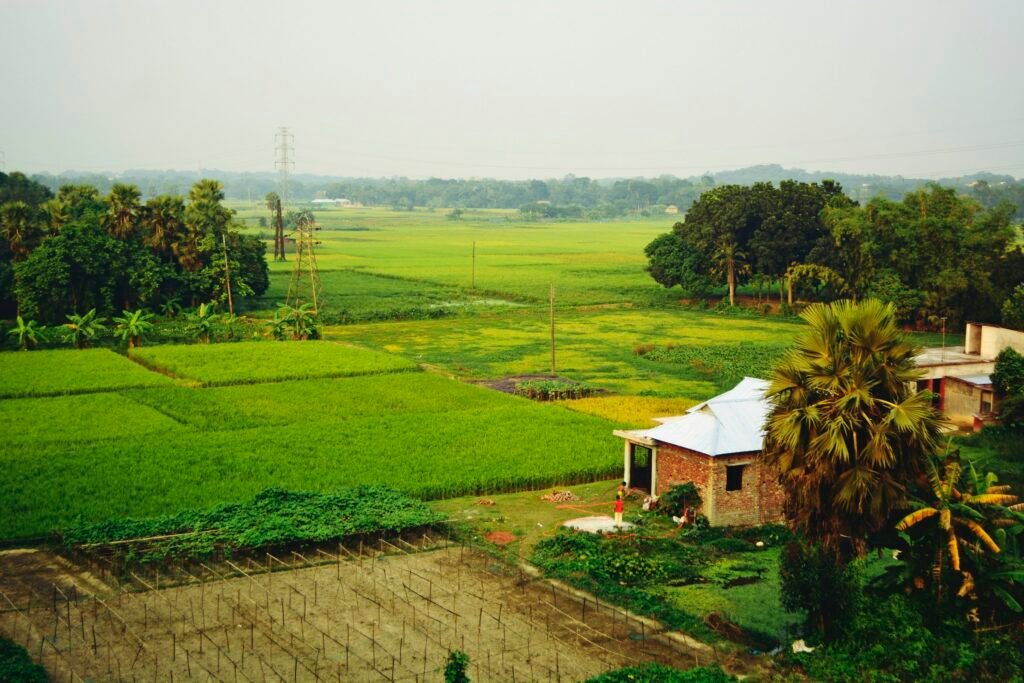
Sylhet has a strong tradition of community-funded education, much of it supported by families in the UK. This page explains the registration and permission regimes for schools and universities, the choice of legal vehicle (trust, society or company), land and building requirements, staff and fee issues, and how diaspora donors and founders can protect the projects they fund.
Registering a private school under the 1962 Ordinance
The 1962 Ordinance defines a "private school" broadly: any institution, including O and A level, nursery, Junior Cambridge, Senior Cambridge, International Baccalaureate or equivalent institutions, established and run by a person or body other than the Government or a local council to give organised instruction to ten or more children at a time. Institutions recognised by the Government, an education board or another prescribed authority are excluded. Section 3 prohibits establishing or running a private school except in accordance with the Ordinance.
| Level | Registering authority (s.2(h)) |
|---|---|
| Secondary and higher secondary (including O and A level equivalents) | The concerned Board of Intermediate and Secondary Education, or other prescribed authority |
| Junior secondary (classes VI to VIII) | Directorate of Secondary and Higher Education, or an authorised regional deputy director |
| Primary, nursery and kindergarten | Directorate of Primary Education, or an authorised divisional deputy director |
Under section 4, the founder applies in the prescribed form with the prescribed fee.
The registering authority enquires whether the buildings and premises are adequate and hygienic, the staff are qualified, adequate and adequately paid according to prescribed standards, the fees are not disproportionate to facilities and do not exceed prescribed limits, the school will not be run in an undesirable manner or by undesirable persons, the curriculum is approved by the education board or other prescribed authority, and no unapproved textbooks are prescribed. If satisfied after enquiry within ninety days of the application, it grants registration.
Running pending registration, cancellation and penalties
A new school may open and run after applying, until the application is decided, but must close immediately if registration is refused (section 5). Registration may be suspended or cancelled for breach of the Ordinance, the rules or the certificate conditions (section 6). Appeals against refusal, suspension or cancellation go to the appellate authority within thirty days (section 7). Wilful contravention is punishable with imprisonment of up to one year, a fine of up to ten thousand taka, or both (section 9).
Registration is not a one-off event. The certificate may carry conditions, and the person or persons to whom it is granted are responsible for complying with the Ordinance, the rules and those conditions (section 4(5)). Changes of premises, ownership or management should therefore be discussed with the registering authority before they happen.
English-medium schools sometimes assume that affiliation with an overseas examination body is enough. It is not: the 1962 Ordinance expressly covers O and A level institutions, and registration with the Bangladesh registering authority is required in addition to any arrangements with foreign examination boards.
Our insight on setting up an English-medium school goes through the application in more detail.
Private university permission under the 2010 Act
No private university may be established anywhere in Bangladesh without temporary permission or, later, a certificate from the Government under the 2010 Act (section 3). The founder applies in the form prescribed by the UGC (section 5). The conditions for temporary permission in section 6 include:
- a board of trustees of not fewer than nine and not more than twenty-one members;
- adequate classrooms, library, laboratories, auditorium, seminar rooms, offices and separate common rooms for students;
- an owned or rented building of at least 25,000 square feet;
- at least three faculties with at least six departments;
- an academic plan and a detailed curriculum, with seat numbers for each subject, approved in advance by the UGC;
- the number of full-time qualified teachers set by the UGC for each department, programme and course;
- a reserve fund in the university's name, with a lower minimum outside the Dhaka and Chattogram metropolitan areas.
Temporary permission is valid for seven years (section 7(2)). The Government may refuse an application, after a hearing, if the conditions are not met or if it considers more private universities unnecessary for a period; a refused applicant may seek reconsideration within thirty days, and the Government must decide within sixty days (section 7).
Moving to a permanent certificate
Within the temporary permission period, the university must meet the conditions for a certificate in section 9. These include at least one acre of unencumbered, undivided land in the university's name in the Dhaka and Chattogram metropolitan areas, or at least two acres elsewhere, which would include Sylhet; a permanent campus built on that land to plans approved by the competent authority; a prohibition on mortgaging or transferring the land; free places for specified categories of students; arrangements for student safety; and a research allocation in the budget.
A university that fails to apply or to meet the conditions in time risks losing its permission (section 12). Each permission specifies the city or place where the approved campus must be located (section 13). See our insight on private university permission under the 2010 Act.
Governance inside a private university
Section 14 of the 2010 Act requires every private university to have a set of authorities: a board of trustees, a syndicate, an academic council, faculties, institutes, curriculum committees, a finance committee, a teacher appointment committee and a disciplinary committee. Section 15 places the board of trustees at the top, with a chair elected from among its members. Section 35 requires UGC written approval for academic plans and curricula, and section 36 requires an internal quality assurance cell. For founders, the practical point is that a private university cannot be run like a family business: the statutory structure, UGC oversight and land conditions all limit what trustees may do with the institution's assets, and disputes among trustees can attract regulatory intervention.
Before committing to a university project, founders from the diaspora should test the numbers carefully: the reserve fund, the building and land requirements, the full-time teaching staff required for each programme, and the time needed to build a permanent campus within the seven-year permission. Many proposals that look attractive on paper falter at the land stage, because assembling two acres of clean, unencumbered, undivided land in the university's name in or near Sylhet city is difficult and slow.
Recognised schools, colleges and other private education providers
Many private schools and colleges in the division follow the national curriculum and seek recognition from the Board of Intermediate and Secondary Education, Sylhet, so that their students can sit public examinations as regular candidates. Recognised institutions fall outside the 1962 Ordinance's definition of a private school, and instead follow the board's and the education ministry's rules on recognition, governing bodies, teacher qualifications and, where Government salary support is sought, the separate requirements that attach to it. Recognition is usually granted for a period and must be renewed, and boards can withdraw it for breaches. Madrasas follow their own board's regime, and technical and vocational institutions their own.
Coaching centres, tutorial homes and short-course training institutes occupy a grey area. Many do not fit neatly into either regime, but they still need a trade licence, must observe building and fire safety requirements, and are subject to consumer law if they fail to deliver the courses students pay for. Founders planning to grow a coaching centre into a school should plan for registration under the 1962 Ordinance once they teach ten or more children in organised classes.
Choosing the vehicle: trust, society or company
Private education projects in Sylhet are usually run on a not-for-profit basis, and the vehicle should reflect that. The main options are:
| Vehicle | Law | Suits | Points to watch |
|---|---|---|---|
| Trust | Trusts Act 1882 | Family or community schools with a defined founding group | Trust deed must set objects, trustees, succession and control of land; registration of the deed |
| Society | Societies Registration Act 1860 | Community-run schools with a membership base | Memorandum and rules; elections and governance disputes |
| Not-for-profit company | Companies Act 1994 | Larger institutions wanting corporate governance and limited liability | RJSC compliance; profit restrictions |
| Board of trustees | Private University Act 2010 | Private universities | Statutory composition and powers |
The vehicle matters because it determines who owns the land, who appoints the head and governing body, and what happens when the founder dies or the founding families disagree. Our insight on setting up a charitable trust for a village project covers the trust option, and charities, NGOs and foreign donations explains when funding from abroad brings in the NGO Affairs Bureau.
Land, buildings, fees and staff in private education
Private education needs secure land. Schools often occupy land donated by a family, sometimes without a registered gift deed, or land held in a founder's personal name. Both create risk: heirs may later claim the land, or the founder's creditors may pursue it. Land should be transferred by registered deed to the trust, society or company, with mutation into its name. Buildings need approval from the relevant authority, and the registering authority will look at adequacy and hygiene. See land due diligence in Sylhet.
Fees must not be disproportionate to the facilities provided or exceed prescribed limits (section 4(2)(c) of the 1962 Ordinance), and school fee increases are a frequent source of complaints from parents. Teachers' qualifications and pay are part of registration, and staff contracts should be written, setting out duties, term dates, holidays and notice. Some staff, such as guards, cleaners and drivers, will usually be workers under the Bangladesh Labour Act 2006; see hospitality and service-sector employment. Foreign teachers need work permits; see work permits for foreign staff.
Illustration: a hypothetical family in east London funds a primary school in their village in Moulvibazar, built on land owned by an uncle. Twenty years later the uncle dies, and his heirs claim the land. If the uncle had made a registered gift of the land to a trust with the school as its object, and the trust had obtained mutation, the school's position would be secure. Without that, the trustees may face a long title dispute.
Governance disputes
Disputes in private education are often about control rather than money: rival factions on a governing body, a founder's family against later trustees, or donors abroad against the head teacher on the ground. A well-drafted trust deed or society rules, with clear provisions on membership, voting, removal of trustees and the appointment of the head, prevents most of these. Where disputes do arise, the registering authority, the courts and, for societies, the registrar may each have a role, and urgent applications to protect the school's assets or accounts are sometimes needed.
Complaints from parents
Parents' complaints usually concern fees, admission, discipline or the quality of teaching. A written fee policy, published admission criteria, a discipline policy and a simple complaints procedure reduce friction and help demonstrate to the registering authority that the school is properly run. Records of how complaints were handled are useful if a matter escalates.
Diaspora founders and donors in private education
Much private education in the division is funded by the diaspora, whether as donations to existing institutions or as new schools founded by families abroad. Donors and founders should consider:
- Governance. Who sits on the governing body, how members are replaced, and whether donors abroad have a defined role.
- Land. Transfer land to the institution's vehicle by registered deed, and keep the mutation records.
- Funding channels. Send money through banking channels to the institution's account, not to individuals, and keep receipts; foreign donations to some organisations require NGO Affairs Bureau approval.
- Registration. Make sure the school is registered under the 1962 Ordinance or recognised by the board, and that renewals and conditions are met.
- Reporting. Ask for annual accounts and reports, and build that requirement into the trust deed or rules.
Diaspora founders can also act through a power of attorney from the UK for land transfers and registration steps that require a signature in Bangladesh.
How TRW & Co helps
We advise founders, trustees and investors on private education across the Sylhet division: choosing and setting up the trust, society or company, transferring land, registration under the 1962 Ordinance, board recognition issues, private university applications under the 2010 Act, staff contracts and fee policies, and governance disputes. Diaspora founders and donors can instruct us by email at info@trw.co and follow progress remotely; local clients can meet us at our Sylhet office at Surma Tower, opposite the Judge Court. See tourism, hospitality and health, or contact us.
Frequently asked questions
Does an English-medium school in Sylhet need registration?
Yes, if it is not recognised by the Government or an education board. The 1962 Ordinance expressly includes O and A level, nursery, Junior and Senior Cambridge and International Baccalaureate institutions teaching ten or more children. Secondary and higher secondary schools register with the concerned education board or other prescribed authority.
Can a school open before registration is granted?
Under section 5 of the 1962 Ordinance, a new school may be established and run after an application for registration has been made, until the application is decided. If registration is refused, the school must close immediately. Founders should therefore apply early and meet the standards from the outset.
How much land does a private university in Sylhet need?
To move from temporary permission to a certificate, section 9 of the Private University Act 2010 requires at least one acre in the Dhaka and Chattogram metropolitan areas and at least two acres elsewhere, unencumbered and in the university’s name, with a permanent campus built to approved plans within the permission period.
Should a village school be run through a trust?
A trust is often a good fit for a family or community school, because the trust deed can fix the school’s objects, the trustees and how they are replaced, and hold the land. A registered society or not-for-profit company may suit larger or membership-based institutions. The right choice depends on governance and funding.
Can donations from the UK be sent directly to a school?
Donations should go through banking channels to the institution’s own account, with receipts. Depending on the recipient’s status and the purpose, foreign donations may need approval under the foreign donations law administered by the NGO Affairs Bureau. Take advice before setting up regular funding from abroad.
Sources
General information only, not legal advice. References to statutes, courts and authorities describe published law and practice at the date shown.