

Who Owns Tea Estate Land in Sylhet?
Most tea estate land in Sylhet, Moulvibazar and Habiganj belongs to the Government and is leased to the companies that run the gardens. Understanding that structure is the starting point for any purchase, loan, project or dispute involving a tea garden.

Key takeaways
- Most tea estate land is government land held by tea companies on long-term leases.
- Section 20(4A) and (4B) of the SAT Act 1950 explain how certificated tea land vested in the Government.
- Small holdings are usually private land owned by the grower and registered with the Tea Board.
- The Tea Board can stop garden land being used for purposes inconsistent with the Tea Act 2016.
- Always check the government lease and current khatian before relying on claims of ownership.
Who owns tea estate land? The short answer
In most cases the Government does. The bulk of tea estate land in Sylhet, Moulvibazar and Habiganj is state land held by tea companies under long-term leases from the Government, not freehold property of the company that runs the garden. The tea company owns its factory machinery, its business and its leasehold interest, and it carries the obligations that come with the lease; the underlying land belongs to the state. A smaller amount of tea land is held in other ways, such as land retained above the land ceiling under a certificate, or land owned outright by small growers. Anyone buying shares in a tea company, lending against a garden or planning a project on tea estate land needs to start by establishing which of these categories applies.
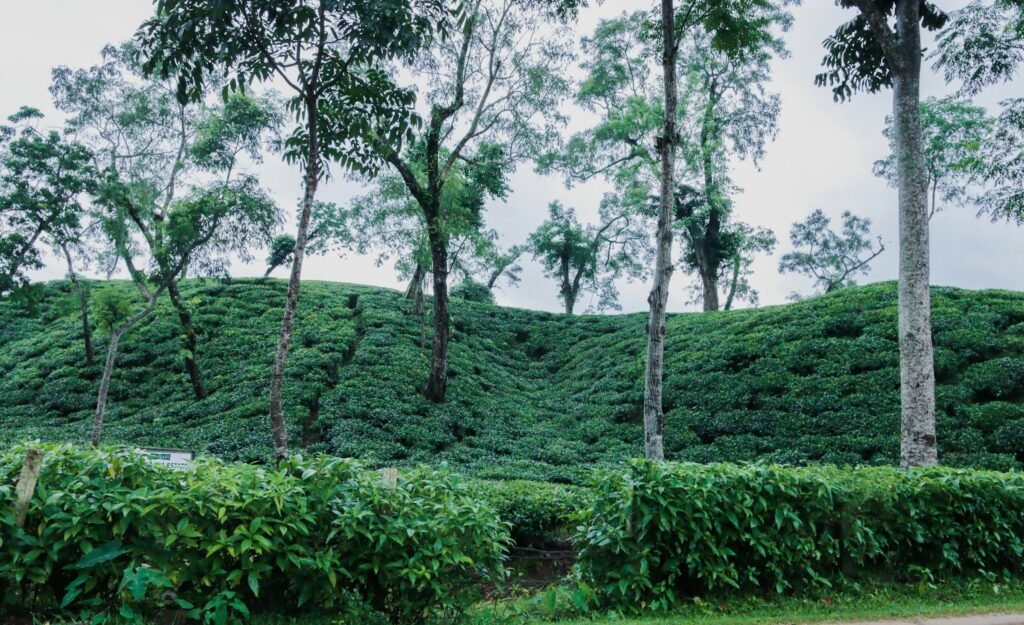
This note explains how that position came about, how the State Acquisition and Tenancy Act 1950 and the Tea Act 2016 fit together, and what it means in practice for owners, workers, buyers and neighbours.
How tea estate land came under state ownership
When the zamindari system was abolished under the State Acquisition and Tenancy Act 1950, rent-receiving interests vested in the state and landholders were limited to a ceiling. Tea gardens, which occupy very large areas, needed special treatment. section 20 of the State Acquisition and Tenancy Act 1950 deals with this in two layers.
- Sub-section (4A) allows a person holding land for the cultivation and manufacture of tea (and also coffee and rubber) to retain land above the statutory limit if certified by the prescribed revenue authority, with the certificate subject to periodic revision. A derelict tea garden is expressly not treated as land held for tea.
- Sub-section (4B) provides that land held under such a certificate vests absolutely in the Government on the date the Government decides in favour of the certificate-holder's application for a long-term lease. The holder gives up any claim to acquisition compensation, the certificate ends, and the land may be leased back to the holder without a premium on the terms the Government sets.
In other words, the law converted many old tea holdings into government land leased to the operator. Leasing of government land more generally is dealt with under section 81 of the same Act, and the Ministry of Land administers the leases through the district administration.
Categories of tea estate land in Sylhet division
| Category | Who owns the land | Typical documents | Key questions |
|---|---|---|---|
| Government leasehold garden | The Government; the company holds a long-term lease | Lease deed with the Government, rent receipts, record of rights showing government ownership | Lease term and expiry, permitted use, rent arrears, conditions on transfer |
| Certificated holding above the ceiling | The holder, subject to the certificate under section 20(4A) | Revenue authority certificate, record of rights | Is the certificate current, and has a lease application converted it under section 20(4B)? |
| Small holding (ক্ষুদ্রায়তন বাগান) | Usually the individual grower, as private land | Khatian, mutation, tax receipts, Tea Board registration | Is the land agricultural private land, and is the holding registered? |
| Board-established or rehabilitated garden | Depends on title; the Tea Board may sell or transfer with government approval | Board orders and transfer documents | Section 14 of the Tea Act 2016 allows such transfers only to Bangladeshi citizens, businesses or companies |
| Land within the garden used by workers | Part of the leased land | Garden maps, labour line plans | Housing and cultivation by workers are usually part of the estate's arrangements, not separate titles |
The record of rights (khatian) for a mouza covering a tea garden is often the quickest way to see which category applies. A government leasehold garden will usually show the Government, through the Deputy Commissioner, as owner, with the lease recorded separately.
The Tea Board's role on tea estate land
Ownership is only half the picture. Under the Tea Act 2016 the Bangladesh Tea Board has extensive control over how tea land is used, whoever holds title:
- Section 7 lists the Board's functions, including registration of gardens and factories, licensing of garden owners, manufacturers, exporters, blenders, bidders, brokers and traders, taking over and rehabilitating abandoned gardens, and ensuring proper use of surplus land not under tea.
- Section 16 lets the Board direct a garden or small-holding owner to cultivate or replant a minimum area each year, with an administrative fine of Tk 5,000 per acre per year for non-compliance and an appeal to the Chairman within 30 days.
- Section 17 allows the Board, notwithstanding any other law, to order that garden land must not be used for any purpose inconsistent with the Act.
- Section 25 prohibits manufacturing tea except in a registered factory.
The Board can also be directed by the Government to acquire, take over or manage businesses, and it supports small-holding growers through cooperative activities. Its registration records are therefore a second register, alongside the land records, that anyone dealing with a garden should check. A company that is in good standing with the Ministry of Land but in breach of Board directions can still face fines, restrictions on sales through auction or orders on land use.
So a garden operator may hold a valid lease from the Government and still be unable to use part of the land for, say, a resort or a fish project without the Tea Board's approval. Our note on tea garden land conversion covers this in detail.
Before relying on any document describing a tea company as the "owner" of its garden, ask for the lease deed with the Government and the current khatian. Valuations, bank security and share sale agreements regularly overstate what the company actually owns.
What this means for buyers, lenders, workers and neighbours
The leasehold structure affects every group that deals with a garden, though in different ways. The common thread is that the Government, as landowner, and the Tea Board, as regulator, sit behind every transaction on tea estate land, even when neither is named in the contract.
Buyers and investors
Buying a tea company is buying a leaseholder. The value lies in the unexpired lease term, the planted area, the factory and the company's licences. Due diligence must confirm the lease terms, any conditions on change of control and rent payments. See our note on tea company acquisition due diligence.
Lenders
A bank cannot take a mortgage over land the borrower does not own. Security over tea estate land is usually a charge over the leasehold interest, subject to the lease's conditions, plus security over the factory, crop and receivables.
Workers and their communities
Tea worker families have often lived on estates for generations, and their housing and small cultivation plots are part of the estate's arrangements rather than separately titled land. Questions about workers' homes and land use therefore involve the estate, the Government as landowner and labour law together.
Neighbours
Boundary disputes between tea estates and neighbouring villages are common in Moulvibazar and Habiganj. Because the land is usually government land, the district administration and the land records are central to resolving them, and a civil suit may involve the Government as a party.
Checking title to tea estate land step by step
Whether you are an investor, a lender, a neighbour in a boundary dispute or a family with an old claim to land inside a garden, the investigation follows a similar path.
- Identify the mouzas. A large garden can span several mouzas (revenue villages) and even more than one upazila. Obtain the garden map and match it with the mouza maps.
- Collect the records of rights. Obtain certified copies of the current survey khatians and, where history matters, earlier CS, SA and RS records for the relevant dags (plot numbers). They show whether the land is recorded as government land, as certificated land or in private names.
- Obtain the lease or certificate. For government leasehold, get the registered lease, any renewals and the rent account. For certificated land, get the certificate and any revision orders.
- Check Tea Board registration. Confirm the garden and factory registrations and licences, and any Board directions or orders under sections 16 and 17.
- Look for encumbrances and disputes. Search for registered charges, pending suits, writ petitions and land-office proceedings concerning the dags.
- Walk the boundary. Compare what is on the ground, including labour lines, schools, places of worship and encroachments, with the map and lease.
Older gardens often have gaps in the paperwork. A missing renewal deed or an unrecorded transfer does not necessarily defeat the company's position, but it must be identified and explained before money changes hands.
Disputes and where they are heard
Disputes over tea estate land can reach several forums. Questions about the record of rights may go to the land administration or the land survey tribunal; ownership and possession disputes go to the civil courts; challenges to government decisions on leases or land use may come before the High Court Division in writ jurisdiction; and Tea Board orders have their own appeal routes. Because the Government is often the landowner, many such cases name the Deputy Commissioner as a party. Choosing the right forum early saves years.
Illustration: a share sale that overstated title
Illustration (hypothetical): A Sylhet investor agrees to buy a majority stake in a company running a 600-acre garden near Sreemangal. The information memorandum describes the company as owning "600 acres of freehold land". Due diligence shows the garden is government land held on a long-term lease, with lease rent unpaid for several years and part of the lease area used by a third party for a fish project without Tea Board approval. The investor renegotiates the price, requires the seller to clear rent arrears before completion and adds an indemnity covering any Board action under section 17. The deal proceeds, but on the true basis: a leasehold business, not a landowner.
The bank financing the purchase takes the same approach. Instead of a mortgage over "freehold" land, it takes security over the company's leasehold interest, subject to the lease conditions, together with a charge over the factory, stock and receivables, and asks for evidence that the lessor's consent is not needed for the change of control or has been obtained.
How TRW & Co helps with tea estate land
We advise tea companies, investors, lenders and neighbouring landowners on tea estate land: reviewing leases and land records, investigating title and boundaries, advising on Tea Board requirements and acting in disputes. Our related pages cover tea estate land leases, Tea Act 2016 and Tea Board licensing and khas, haor and government land, and our note on renewing a tea estate lease covers lease expiry. Visit our Sylhet office at Surma Tower, opposite the Judge Court, or write to info@trw.co from abroad. Contact us to discuss a garden.
Frequently asked questions
Can a tea company sell its garden land?
Where the land is government land, the company can only deal with its leasehold interest, and usually only with the consent or within the conditions set by the Government as lessor. It cannot sell freehold title it does not have. Transfers of shares in the company are a separate matter but may still be affected by lease conditions.
Are all tea gardens on government land?
No. Most large estates are government leasehold, but some land is held under certificates allowing retention above the ceiling, and small holdings are usually privately owned. The record of rights and the lease or certificate show which category applies to a particular garden.
What is a derelict tea garden?
The SAT Act excludes derelict tea gardens from the special treatment given to land held for tea. Such land may not qualify for retention above the ceiling. The Tea Board also has powers to take over and rehabilitate abandoned gardens. Whether a garden is derelict is a question of fact.
Can I build a house or resort on tea estate land?
Not without the necessary permissions. The landowner (usually the Government), the lease terms and the Tea Board's powers under section 17 of the Tea Act 2016 all restrict non-tea use. Unauthorised construction risks Board orders and lease breach.
Do tea workers own the land their homes are on?
Generally not as separately titled land; housing and small plots are part of the estate's arrangements on leased land. Their rights arise mainly from labour law, the terms of employment and the estate's practices. Specific situations need individual advice.
Sources
General information only, not legal advice. References to statutes, courts and authorities describe published law and practice at the date shown.
 Tea and agribusiness
Flood Damage and Crop Losses: Insurance and Contracts
Floods in the haors can wipe out a season in days, but crop losses do not fall only on the grower. Insurance policies, supply contracts, barga… 9 min read
 Tea and agribusiness
Tea Garden Land Conversion: What Is Not Allowed
Turning part of a tea estate into housing, a resort, a fishery or a brickfield is restricted by the lease, the Tea Act 2016 and, since… 8 min read
 Tea and agribusiness
Tea Workers’ Wages: How They Are Set in Bangladesh
Tea workers’ wages in Sylhet's gardens come from a mix of statutory minimum wages, collective agreements and in-kind benefits that the Labour Act requires. This note… 8 min read