

Flood Damage and Crop Losses: Insurance and Contracts
Floods in the haors can wipe out a season in days, but crop losses do not fall only on the grower. Insurance policies, supply contracts, barga agreements and bank loans each decide who pays. This guide explains the Insurance Act 2010 claim rules, frustration under the Contract Act and sharecroppers' rights under the Land Reform Act 2023.
Key takeaways
- Who bears crop losses depends on the policy, contract, barga agreement or lease signed before the flood.
- Insurers that delay payment beyond 90 days after a complete claim owe interest at bank rate plus 5%.
- Small claim disputes can go to IDRA; other claim disputes go to IDRA dispute settlement committees.
- A contract tied to a named plot may be void if flood destroys it, but advances must normally be returned.
- A flood is reasonable cause, so a failed crop alone does not let an owner end a barga agreement.
- Loans survive floods: ask the bank in writing for rescheduling before a default is recorded.
Who bears crop losses after a Sylhet flood
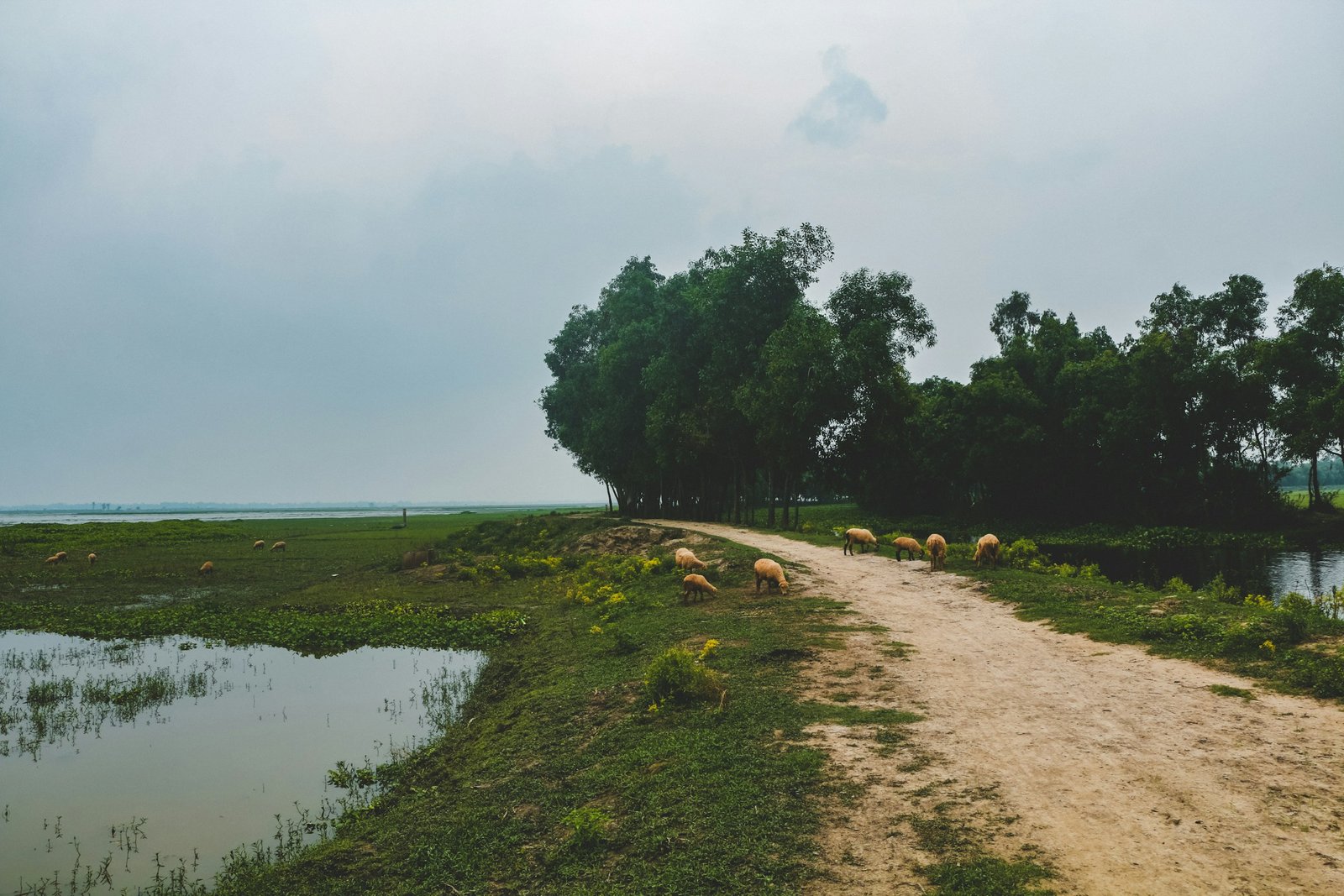
When flash floods sweep across the haors of Sunamganj, Habiganj and Moulvibazar just before the boro harvest, or when the Surma and Kushiyara overtop their banks in the monsoon, the first legal question is a simple one: who carries the crop losses? In Bangladesh the answer rarely comes from a single statute. It comes from the documents that were signed, or never signed, before the water arrived: an insurance policy, if there was one; a supply or contract-farming agreement; a sharecropping (barga) agreement or a lease of the land; and any bank loan taken against the crop. Where those documents are silent, the general rules of the Contract Act 1872 and, for sharecroppers, the Land Reform Act 2023 fill the gap.

This note explains how those pieces fit together for farmers, landowners, buyers and lenders across the Sylhet division, and for diaspora families who own farmland in their home villages and let it to sharecroppers through relatives. It is based on the statutes as published on the official laws website in November 2026. Policy wording and contract terms differ widely, so treat what follows as a map of the questions to ask rather than a substitute for reading your own documents.
Is there insurance cover at all?
Most smallholdings in the division are not insured. Crop insurance in Bangladesh has largely been offered through limited schemes and pilot products, some of them linked to farm credit, and ordinary farm or property policies may exclude flood or cover it only as an optional extension. Larger agribusinesses such as tea estates, poultry and fish farms, cold stores and food processors are more likely to hold property, stock or business-interruption cover, and lenders sometimes require insurance as a loan condition. The first task after a flood is therefore to find out whether any policy exists, in whose name, and what it actually covers.
Insurance business is governed by the Insurance Act 2010 and supervised by the Insurance Development and Regulatory Authority (IDRA), created by its own Act of the same year. A policy is a contract, so its wording controls. Read these parts with care:
- Insured perils. Is flood, inundation, storm or excess rainfall covered, excluded, or added by a separate extension with its own premium?
- Trigger. An indemnity policy pays for loss you actually prove. An index-based policy pays when rainfall or water levels at a reference station pass a set measure, whether or not your own field was harmed.
- Property and period. Standing crop, harvested paddy in store, seed, fish stock and machinery are usually treated differently, and cover on a crop may end at harvest.
- Notice and evidence. Most policies demand prompt written notice and require damaged property to be preserved for inspection.
- Sum insured and deductible. A policy may reduce the payout proportionately if the property was under-insured.
Making a claim for crop losses
Insurers pay on evidence. The steps below apply to most flood claims, whether for a standing crop, stored produce or farm buildings.
- Notify in writing at once. Tell the insurer, and the bank if the policy came with a loan, the date, place and nature of the loss. Keep proof of sending.
- Record the damage. Take dated photographs and video of fields, water levels and stored produce, and list the affected plots by mouza and dag number (the village survey unit and plot number used in the land records).
- Gather independent evidence. Damage assessments by the Upazila Agriculture Office or the local administration, and statements from neighbours or the Union Parishad, can corroborate your account.
- Work with the surveyor. On non-life policies insurers usually appoint a licensed surveyor, whom the Insurance Act 2010 defines as a person who examines and gives an impartial opinion on the cause and extent of a loss. Attend the inspection and give your own figures in writing.
- Submit a complete file. Note the date the last document was delivered, because it starts the clock for interest.
Section 72 of the Insurance Act 2010 is the claimant's main lever. Where money is payable under a policy and the claimant has submitted all the documents, an insurer that fails to pay within 90 days of the claim falling due or the formalities being completed, whichever is later, must pay interest at 5% above the prevailing bank rate, calculated monthly, unless it proves that the delay was beyond its control.
If the insurer disputes the amount, section 71 allows a claimant to refer a dispute over a small claim, up to the limit set by rules, to IDRA, whose decision is final and enforceable like a court decree. For other claim disputes, section 73 requires IDRA to form dispute settlement committees, and a person dissatisfied with a committee's decision may go to court within 30 days of it. A civil suit is the fallback; check the policy's own time limits and the Limitation Act 1908 early, because a claim can be lost simply by waiting.
When a flood makes a contract impossible
Many Sylhet growers sell before they harvest. A trader may pay an advance (often called dadan) against a promised quantity of paddy, a processor may contract for lemons, pineapples or vegetables, and a fish farmer may have agreed to supply a buyer in Dhaka. When the crop is destroyed, who returns what? The contract itself is the first stop. A well-drafted agricultural agreement has a force majeure clause that defines flood and other natural events, sets a notice period, and states the consequence: suspension, reduced quantity, an extension, or termination with a refund of advances. If there is such a clause, follow its notice requirements exactly, because late notice may forfeit its protection.
Where the contract is silent, the Contract Act 1872 applies. Under section 56, a contract to do an act which, after the contract is made, becomes impossible becomes void when the act becomes impossible. The doctrine is narrow. A promise to deliver paddy from a named plot may be frustrated if that plot is drowned, but a promise to deliver a quantity of a given grade from any source usually is not, because the seller can still buy elsewhere, even at a loss. Section 65 then requires a person who received an advantage under a contract that becomes void to restore it, which in practice means repaying advances.
Illustration: a Sunamganj farmer takes an advance from a rice trader for paddy from his own land in a named haor. A flash flood destroys the crop a week before harvest. If the written contract ties delivery to that land and says nothing about flood, the farmer can argue that the contract became void under section 56, but he will normally have to return the advance under section 65. If the contract was for paddy of a stated grade without reference to any land, the trader may sue for damages for non-delivery. The outcome turns on drafting, not on the weather.
Before each boro season, review your supply and contract-farming agreements. If you are the grower, tie delivery to named land; add a flood clause with a short written notice period; say clearly whether advances are refunded, rolled over to the next season or forgiven; and keep a signed, witnessed copy.
Crop losses on sharecropped and leased land
A large share of farmland in the division is cultivated by bargadars (sharecroppers), often on land owned by families in the UK or elsewhere. The Land Reform Act 2023 (Act 37 of 2023), which replaced the Land Reforms Ordinance 1984, now governs these arrangements. Three of its provisions matter after a flood:
- A written agreement. Section 8 provides that no one may let land for cultivation on crop-sharing terms without an agreement in the form prescribed by rules, and that a barga agreement runs for at least one year.
- Sharing the harvest. Section 12 divides produce into thirds: one for the landowner for the land, one for the bargadar for labour, and one divided between them in proportion to the cultivation costs, other than labour, that each bore. If the crop fails, there is nothing to divide, so each side absorbs its own contribution.
- No eviction for a drowned crop. Under section 11, an owner may end a barga agreement only through an order on listed grounds, such as failure to cultivate, or to produce the average yield of comparable land, without reasonable cause. A flood is an obvious reasonable cause, so flood-related crop losses are not by themselves a ground to remove a sharecropper.
Cash leases work differently. Where a tenant pays a fixed rent regardless of the harvest, the tenant normally carries the crop risk and the rent remains due unless the lease provides for remission. Owners and tenants often agree reductions after a disaster; record any variation in writing, especially where the owner lives abroad and a relative manages the land. Leases of government jalmahals (water bodies) and khas (state) land carry their own terms, so check the lease deed and the applicable policy before stopping payment.
| Arrangement | Who bears crop losses by default | What can change the position |
|---|---|---|
| Owner-cultivated land, uninsured | The owner | Government relief or bank relief measures |
| Insured crop or stock | The insurer, to the extent of cover | Exclusions, deductibles, late notice, under-insurance |
| Barga (sharecropping) | Owner and bargadar, each losing what they contributed | Shares fixed by section 12 of the Land Reform Act 2023 |
| Fixed-rent lease | The tenant | A rent-remission clause or written variation |
| Forward sale with advance | Depends on whether delivery was tied to specific land | Force majeure clause; Contract Act ss.56 and 65 |
| Crop loan | The borrower still owes the bank | Rescheduling, deferral or a linked insurance claim |
Loans, guarantors and relief
A flood does not cancel a loan. A farmer or agribusiness that borrowed against a crop still owes the bank, and most loan agreements treat a missed instalment as a default. Bangladesh Bank has in the past allowed banks to defer or reschedule agricultural loans and to extend fresh credit in disaster-affected areas, and banks often announce relief measures after major floods, but the terms change from year to year. Ask your bank in writing about any current relief circular, apply to reschedule before a default is recorded, and keep copies of every application. If the loan was linked to an insurance product, make sure the bank, as a named beneficiary, files or supports the claim. Guarantors, frequently relatives, should be told early, because their liability continues.
Good preparation reduces disputes after the next flood:
- Keep the land records, barga agreements and leases for every plot in one place, with copies held by the owner abroad.
- Ask your insurer or bank, before the season, exactly which perils a policy covers and for which period.
- Photograph fields and stores before the monsoon to show their condition and boundaries.
- Agree in advance with buyers how advances will be treated if a crop is lost.
How TRW & Co helps with crop losses
We advise farmers, agribusinesses, landowners, buyers and lenders in the Sylhet division on what happens to crop losses under insurance policies, supply and contract-farming agreements, barga agreements and leases. We review policy wording, prepare claim files and correspondence with insurers, and take disputes through IDRA's processes or the courts. We draft and review agricultural contracts with workable flood clauses, and advise on loan rescheduling requests and guarantor exposure. For landowners abroad we review barga and lease arrangements and advise relatives who manage land locally. Clients in the UK and elsewhere can instruct us by email at info@trw.co, and we meet clients at our Sylhet office at Surma Tower, opposite the Judge Court. Contact us to discuss your situation.
Related reading: our guides to agribusiness contracts, leases and tenancy and banking and finance, and our notes on contract farming agreements and liability for flood-related property damage. The statutes are on the official laws website: the Insurance Act 2010, the Land Reform Act 2023 and the Contract Act 1872.
Frequently asked questions
Does a standard farm or property policy cover flood?
Not necessarily. Many policies list insured perils and either exclude flood or cover it only through an extension with its own premium. Index-based crop products pay on rainfall or water-level readings rather than proven field damage. Read the schedule and exclusions, and ask the insurer in writing to confirm the position before the monsoon rather than after a loss.
How long can an insurer take to pay a flood claim?
Section 72 of the Insurance Act 2010 requires payment within 90 days of the claim falling due or the claimant completing all formalities, whichever is later. If the insurer misses that period it must pay interest at 5% above the bank rate, calculated monthly, unless it proves the delay was beyond its control. Keep proof of the date your file was completed.
Must I repay a trader's advance if floods destroyed my crop?
Usually, yes. Even where the contract became void under section 56 of the Contract Act because delivery from a named plot became impossible, section 65 requires the party who received an advantage, such as an advance, to restore it. A written flood clause can provide a different result, for example rolling the advance into the next season.
Can I evict my bargadar after a flood ruined the harvest?
Not on that ground alone. Section 11 of the Land Reform Act 2023 allows termination only on listed grounds, such as failure to cultivate or to achieve the average yield of comparable land without reasonable cause. A flood is a reasonable cause. Owners abroad should keep the barga agreement in the prescribed form and take advice before acting through relatives.
Who can I complain to if my insurer rejects a claim unfairly?
For small claims within the limit set by rules, section 71 of the Insurance Act 2010 allows a reference to IDRA, whose decision is final. Other claim disputes go to the dispute settlement committees that IDRA must form under section 73, and a party dissatisfied with a committee decision may go to court within 30 days.
Sources
General information only, not legal advice. References to statutes, courts and authorities describe published law and practice at the date shown.
 Tea and agribusiness
Who Owns Tea Estate Land in Sylhet?
Most tea estate land in Sylhet, Moulvibazar and Habiganj belongs to the Government and is leased to the companies that run the gardens. Understanding that structure… 8 min read
 Tea and agribusiness
Tea Garden Land Conversion: What Is Not Allowed
Turning part of a tea estate into housing, a resort, a fishery or a brickfield is restricted by the lease, the Tea Act 2016 and, since… 8 min read
 Tea and agribusiness
Tea Workers’ Wages: How They Are Set in Bangladesh
Tea workers’ wages in Sylhet's gardens come from a mix of statutory minimum wages, collective agreements and in-kind benefits that the Labour Act requires. This note… 8 min read