

Importing Coal and Stone Through Tamabil
Importing through Tamabil is how most Meghalaya coal and stone reaches Sylhet's crushing yards and building sites. This guide follows a consignment from contract to release under the Customs Act 2023 and the Land Port Authority Act 2001, and shows where weight, valuation, port custody and seizure problems arise.

Key takeaways
- Check the current Import Policy Order for the product and the land route before each new contract.
- Declarations are due within five working days of unloading under section 84 of the Customs Act 2023.
- Declarants and their C&F agents share responsibility for accurate declarations and documents.
- BLPA liability for goods in its custody ends ten days after it takes charge of them.
- Keep a document trail for every stone lot, given the crackdown on illegally lifted local stone.
Importing through Tamabil: the legal map
Importing through Tamabil means bringing coal and stone down from the Meghalaya hills, across the Dawki crossing, and into Gowainghat upazila of Sylhet district, where the Bangladesh Land Port Authority (BLPA) runs the port and a customs station clears the goods.
Four sets of rules apply to every truck: import registration and the Import Policy Order, which decide whether you may import the goods at all; the Customs Act 2023, in force since 6 June 2024, which governs declaration, assessment, release and penalties; the Bangladesh Land Port Authority Act 2001, which governs the port, its charges and its liability for goods in its care; and your own contracts with the Indian supplier, the C&F (clearing and forwarding) agent, the transporter and the buyer.
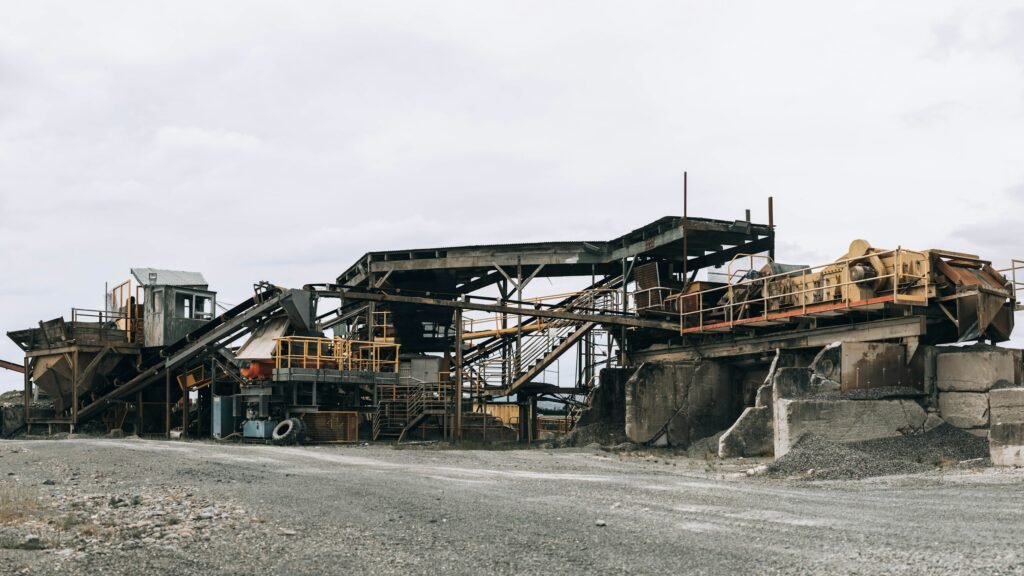
Bulk minerals are unforgiving cargo. Values are low per tonne, so small differences in weight, grade or duty rate decide whether a consignment makes money. For anyone importing through Tamabil, this note follows a consignment from contract to delivery and flags where importers most often lose time or money. It reflects the primary texts and the BLPA's records as checked in November 2026.
Before the first truck: registration and permissions
An importer must hold a current import registration certificate (IRC) from the Office of the Chief Controller of Imports and Exports, a trade licence, a taxpayer identification number and VAT registration, and a bank willing to open a letter of credit or process the payment. The Import Policy Order then in force decides whether coal and stone of the grade you intend to buy may be imported, whether they may enter by this land route, and whether any condition applies.
Policy orders are replaced every few years and amended in between, so anyone importing through Tamabil should check the current text and any port-specific restrictions for each new contract rather than relying on what was allowed last season.
Enforcement runs through customs law. Section 17 of the Customs Act 2023 bars the import of goods prohibited under any other law and lets the Government control imports by notification, while section 3(3) of the Imports and Exports (Control) Act 1950 treats goods moved in breach of an import order as prohibited goods for customs purposes, exposing them to confiscation as well as penalties. The registration certificate must be in the importer's own name; using another firm's IRC, a common shortcut in border trade, risks seizure and prosecution and leaves the real buyer without any standing to contest it.
The journey of a consignment
- Contract and payment. Sign a written contract with the Meghalaya supplier stating grade, size, quantity, tolerance, price basis and whose weighbridge governs. Open the letter of credit or arrange the agreed bank payment.
- Arrival and port entry. Indian trucks cross from Dawki and enter the port area, where the BLPA weighs vehicles and records the cargo. Port charges are levied under a schedule the BLPA publishes with Government approval under section 10 of the 2001 Act.
- Declaration of goods. Your C&F agent lodges the declaration in the customs computer system under section 81 of the Customs Act 2023, stating classification, origin, customs value, quantity and description. Section 84 requires the declaration within five working days of unloading, and a declaration may be lodged in advance where goods are expected within 30 days.
- Assessment and examination. Customs assesses duty under section 90, may examine the goods and may reassess under section 91. Where value or classification cannot be settled immediately, section 93 allows an Assistant Commissioner or more senior officer to assess provisionally and release the goods against a guarantee.
- Payment and release. Once duties, taxes and port charges are paid, the goods are released for onward delivery to crushing yards, kilns and construction sites.
Under section 82, the person who makes the declaration, or on whose behalf it is made, is responsible for its accuracy and completeness and for the documents presented. If an agent files it, the agent shares responsibility for accuracy, the documents and responding to customs queries. That shared exposure is why the agency agreement with your C&F agent should say who pays for errors.
Issues specific to coal and stone
| Issue | Coal | Stone |
|---|---|---|
| Description and classification | Grade, type and form must match the tariff heading claimed | Boulders, gravel and graded chips may fall under different headings and rates |
| Weight disputes | Moisture changes weight between loading and arrival | Mixed sizes and soil content affect net weight |
| Valuation | Customs compares declared prices with other recent consignments | Same; any notified minimum or tariff value prevails over a lower invoice |
| Quality claims by buyers | Calorific value, ash and sulphur, if specified in the contract | Size grading, cleanliness and hardness |
| Contract clause to include | Sampling method and an agreed laboratory | A size specification with tolerances and a rejection procedure |
Valuation is the most common source of friction. Section 27 of the Customs Act 2023 starts from the price actually paid or payable in an arm's-length sale, but tariff or minimum values fixed by notification override a lower declared price. Keep the contract, bank payment records and supplier correspondence for every consignment, because they are your evidence if customs reassesses. Our separate note on customs valuation disputes at land ports explains the test and the remedies in detail.
Write into your supply contract which weighbridge reading governs payment, how much variation is tolerated, and how a disputed reading or grade is resolved, for example by joint sampling and an agreed laboratory. Without such a clause, a weight dispute at Tamabil becomes your loss, because customs and the port will act on their own figures.
Contracts and payment when importing through Tamabil
Most disputes in this trade are commercial rather than regulatory. The Meghalaya supplier, the Sylhet importer and the downstream buyer often deal on short written orders, telephone agreements and long personal relationships, which work until a price moves or a consignment arrives short. A written contract does not need to be long, but it should cover the points that customs and the port will not resolve for you.
- Price basis and currency. State whether the price is per tonne or per truck, delivered at Dawki or at Tamabil, and in which currency, and match the invoice to the bank payment.
- Risk and title. Say when risk passes, for example on crossing the border or on release from the port, so that losses in the yard are allocated in advance.
- Duty changes. Decide who bears a change in duty rate or a customs reassessment after the contract is signed.
- Disputes. Choose a governing law and a forum, such as arbitration seated in Bangladesh, so that a claim against a supplier across the border does not depend on goodwill alone.
The same discipline applies downstream. When importing through Tamabil for resale, align the grade and tolerance terms in your sale contracts with those in your purchase contracts, so that a quality claim from a buyer can be passed back to the supplier.
Goods in port custody: what the BLPA is liable for
Coal and stone often sit in the port yard while documents or duties are sorted out. Section 8(3) of the Bangladesh Land Port Authority Act 2001 makes the BLPA liable for loss, destruction or deterioration of goods in its custody in the same way as a bailee under sections 151, 152, 161 and 164 of the Contract Act 1872, that is, it must take the care a person of ordinary prudence would take of their own goods.
There is an important limit: the BLPA cannot be held liable under that subsection once ten days have passed from the date it took charge of the goods. Where the BLPA appoints a private operator under section 9, the same liability rule applies to the operator.
Two other provisions bite on slow importers. Under section 11(2), unpaid port charges are recoverable as a public demand under the Public Demands Recovery Act 1913. Under section 11(3), goods not cleared in time, or for which no claimant appears, are disposed of under customs law. The BLPA may, with Government approval, waive charges in whole or part in special cases (s.11(1)), which is worth requesting in writing where delay was caused by customs or by a port breakdown rather than by the importer.
Seizure risk and the local stone question
Imported stone shares the market with stone lifted from local quarries at Bholaganj and Jaflong, where extraction has been restricted and repeatedly litigated. In W.P. No. 13340 of 2025 the High Court Division, on 14 August 2025, issued a Rule over illegal removal of white stone from the Bholaganj quarry area and directed the authorities to recover the removed stone, monitor the area day and night, and list the people involved. In that climate, stone found in transit or in a crushing yard without paperwork may be presumed to be illegally lifted local stone.
The answer for anyone importing through Tamabil is paperwork. Keep the bill of entry, release order, port receipts and transport documents with each lot, and make sure the quantities on your stock register can be traced back to specific consignments. If goods are seized, the Customs Act 2023 provides for notice and adjudication; an order made by an officer below the rank of Commissioner can be appealed to the Commissioner of Customs (Appeal) within three months of being informed of it, extendable by two months for sufficient cause (s.220). Seizures by other agencies follow their own procedures, and speed in producing import documents matters.
Costs and risks of importing through Tamabil: a checklist
- IRC, trade licence, TIN and VAT registration current and in the importer's own name.
- Import Policy Order checked for the specific coal or stone product and the land route.
- Written supply contract covering grade, size, tolerances, governing weight and dispute resolution.
- Written appointment of the C&F agent, allocating responsibility for declaration errors.
- Bank payment documents matching the invoice value and the importer's name.
- Plan to clear goods quickly, ideally within the ten-day window of BLPA custody liability.
- A document trail from bill of entry to buyer, to answer any question about origin.
- Transport contract for onward delivery, with responsibility for loss in transit.
How TRW & Co helps importers
We advise traders and investors importing through Tamabil on registration, Import Policy Order questions, supply contracts with Meghalaya suppliers, C&F agency agreements and transport contracts. When things go wrong, we handle customs reassessments, provisional release, seizures, appeals to the Commissioner of Customs (Appeal) and further appeals, claims against the port for damaged or lost cargo, and disputes with buyers over weight and grade. Diaspora investors funding trading or crushing businesses on the Tamabil road can instruct us by email at info@trw.co. Our Sylhet office is at Surma Tower, opposite the Judge Court. Contact us to discuss a shipment or dispute.
Further reading: our guides to Tamabil land port, customs clearance and import and export licensing, and our note on C&F agents' contracts and liability. Primary texts: the Customs Act 2023 (NBR authentic English text) and the Bangladesh Land Port Authority Act 2001.
Frequently asked questions
Do I need my own IRC to import stone through Tamabil?
Yes. Imports must be made under the importer's own registration certificate, with a trade licence, TIN, VAT registration and bank payment documents in the same name. Importing under another firm's IRC is a common but dangerous shortcut: it exposes the goods to seizure and leaves the real owner unable to contest customs action in its own name.
How quickly must the goods declaration be filed?
Section 84 of the Customs Act 2023 requires the importer to submit the declaration of goods within five working days of unloading at the customs station. A declaration may also be lodged before arrival where the goods are expected within 30 days. Late filing risks delay, extra port charges and penalties.
Is the port responsible if my coal is lost or damaged in the yard?
Section 8(3) of the Bangladesh Land Port Authority Act 2001 makes the BLPA liable as a bailee for loss, destruction or deterioration of goods in its custody, but not after ten days from taking charge of them. Clear goods promptly, record their condition on arrival and notify any loss in writing at once.
Can I appeal if customs raises the value of my consignment?
Yes. Most assessment orders made by officers below Commissioner rank can be appealed to the Commissioner of Customs (Appeal) within three months of being informed of the decision, with up to two more months for sufficient cause, under section 220 of the Customs Act 2023. Provisional release against security under section 93 can keep goods moving meanwhile.
Why does local stone extraction affect importers?
Because imported and locally lifted stone look alike once crushed. With courts and authorities cracking down on illegal extraction at Bholaganj and Jaflong, stone without paperwork may be seized as illegally lifted. Importers should keep bills of entry, release orders and transport documents linked to each stock lot.
Sources
General information only, not legal advice. References to statutes, courts and authorities describe published law and practice at the date shown.
 Trade and border
Exporting to India Through Sylhet Land Ports
Exporting to India from Sylhet runs through Tamabil, Sheola and the newly opened Bholaganj land port. This guide compares the crossings, explains India's 2025 land-port restrictions,… 8 min read
 Trade and border
Truck and Transport Contracts for Cross-Border Cargo
A cargo transport contract decides who pays when a truck is delayed at Tamabil, a load is short, or customs seizes a vehicle. This guide explains… 8 min read
 Trade and border
Transit and Transhipment Rules for Indian Cargo
Transit cargo between mainland India and its north-east can cross Bangladesh duty-free, but only under strict customs procedures. This guide explains the Customs Act, 2023 rules… 8 min read