

Retrenchment Benefits and Notice Under the Labour Act
When a job disappears, the Labour Act sets clear minimums: one month's notice, copies to the inspectorate and the union, and retrenchment benefits of thirty days' wages per year of service or gratuity if higher. Here is how Sylhet employers and workers should apply them.

Key takeaways
- Section 20 applies to workers with at least one year's continuous service.
- One month's written notice stating the reason, or wages in lieu, is required.
- Copies of the notice go to the Chief Inspector and any collective bargaining agent.
- Compensation is 30 days' wages per year, or gratuity if payable and higher.
- Within a category, the last worker employed is retrenched first unless otherwise agreed.
- All dues must be paid within 30 working days of separation.
Retrenchment benefits in brief
Retrenchment means ending a worker's employment because the job is no longer needed. Under section 20 of the Bangladesh Labour Act 2006, a worker with at least one year's continuous service is owed three things: one month's written notice giving the reason (or wages in lieu), a copy of that notice sent to the Chief Inspector and to any collective bargaining agent, and retrenchment benefits of thirty days' wages for every year of service, or gratuity if that is payable and higher. Retrenchment benefits come on top of earned wages, unused leave and provident fund balances.

These rules matter for Sylhet employers facing slow tourist seasons, flood damage, the loss of a supply contract or a decision to automate. They also matter to workers, who often receive a short letter and a cheque without knowing whether the sum is right. This note is based on the Act as consolidated on bdlaws.minlaw.gov.bd in November 2026, including the Bangladesh Labour (Amendment) Act 2026.
When is retrenchment lawful?
The Act defines retrenchment as termination by the employer on the ground of redundancy, and section 20(1) allows it. The reason must be genuine: a real reduction in work, a restructuring, a closed department or new technology. Retrenchment is not a label for removing an individual the employer finds difficult. If the real reason is conduct, the misconduct procedure in sections 23 and 24 applies; if it is ill health certified by a registered doctor, discharge under section 22 is the route.
A sham retrenchment is risky. If the employer advertises the "abolished" post a month later, or retrenches a union activist while keeping newer colleagues in the same category, a Labour Court is likely to see through the label. Keep board minutes, sales figures, contract cancellations or other evidence that explains why the role went.
The notice steps, one by one
- Identify the category. List workers doing the same type of work and their dates of joining.
- Apply the selection rule. Without an agreement to the contrary, section 20(4) requires the employer to retrench the last person employed within that category first.
- Write the notice. Give one month's written notice stating the reason for retrenchment, or pay one month's wages in lieu.
- Send the copies. Send one copy to the Chief Inspector of the Department of Inspection for Factories and Establishments (or the officer the Chief Inspector designates) and another to the collective bargaining agent, if there is one.
- Pay retrenchment benefits. Calculate thirty days' wages for each year of service, compare with any gratuity due, and pay the higher figure.
- Settle the final account. Section 30 requires all dues to be paid within thirty working days after employment ends.
The copy to the Chief Inspector is the step most often forgotten. Send it by a method that leaves proof, keep the receipt on the file, and make sure the date of the notice to the worker and the inspectorate match.
Calculating retrenchment benefits
Two definitions do most of the work. First, "one year" of continuous service: section 14, as replaced in 2026, treats a worker as having completed one year if he or she actually worked at least 240 days in the preceding twelve calendar months (or 120 days in six months for a six-month period). Days of lay-off, sick or accident leave, lawful strike or illegal lockout, and up to 120 days of maternity leave count as days worked. Secondly, "wages" for compensation purposes: section 14(3) uses the last monthly basic wage plus dearness allowance and any ad hoc or interim wage, not the gross package with house rent and other allowances.
| Component | Basis | Source |
|---|---|---|
| Notice | One month in writing, or one month's wages in lieu | s.20(2)(a) |
| Compensation | 30 days' wages per year of service | s.20(2)(c) |
| Gratuity alternative | If payable and higher: at least 30 days' last wages per completed year (or part over six months), 45 days if service exceeds ten years | s.2(10), s.20(2)(c) |
| Extra for retrenchment after lay-off under s.16(7) | No notice needed, but a further 15 days' wages on top | s.20(3) |
| Other dues | Unpaid wages, overtime, leave encashment, festival bonus if due, provident fund | Various |
| Payment deadline | Within 30 working days of separation | s.30 |
Illustration
Hypothetical: A Sylhet travel agency closes its ticketing desk. A ticketing officer joined seven years ago and earns a monthly basic plus dearness allowance of Tk 20,000 (house rent is paid separately). The agency has no gratuity scheme. The worker should receive one month's notice or Tk 20,000 in lieu, plus retrenchment compensation of thirty days' wages for each of seven years, broadly seven months of the defined wage, along with earned leave encashment and any wages still unpaid. If the agency did operate a gratuity scheme paying more, the higher sum would be due instead of the thirty-day figure.
Disputes often arise over the "wage" figure. Some employers use a lower basic than the minimum wage notification for the sector requires; others leave out the dearness allowance. Workers should ask for the calculation in writing, and employers should show it on the settlement sheet.
Retrenchment benefits in common Sylhet situations
The same statutory formula applies across sectors, but the facts that trigger it differ, and so do the traps.
Hotels, resorts and tourism
Sreemangal resorts and Sylhet city hotels see sharp seasonal swings. Where staff are genuinely engaged only for the season, they are seasonal workers under section 4, and the end of the season is not a retrenchment. Where a permanent housekeeper or cook is let go because occupancy has fallen, it is. Hotels should decide in advance which posts are seasonal, say so in the letter of appointment, and not convert permanent staff into "seasonal" ones after the fact.
Flood damage and force majeure
An amendment to the Act inserted section 28A, which deals with the employer-worker relationship after a disaster or loss beyond the employer's control. Its precise conditions matter, and it should not be assumed to cancel retrenchment benefits that section 20 would otherwise require. A business in Sunamganj or Companiganj whose premises were destroyed by flooding should take advice on how the two provisions interact before issuing any notices, and should record the damage carefully with photographs, insurance correspondence and any government damage assessment. Workers, for their part, should keep their own copies of wage slips and attendance records, because those documents are often lost in the same flood.
Tea estates and agro-processing
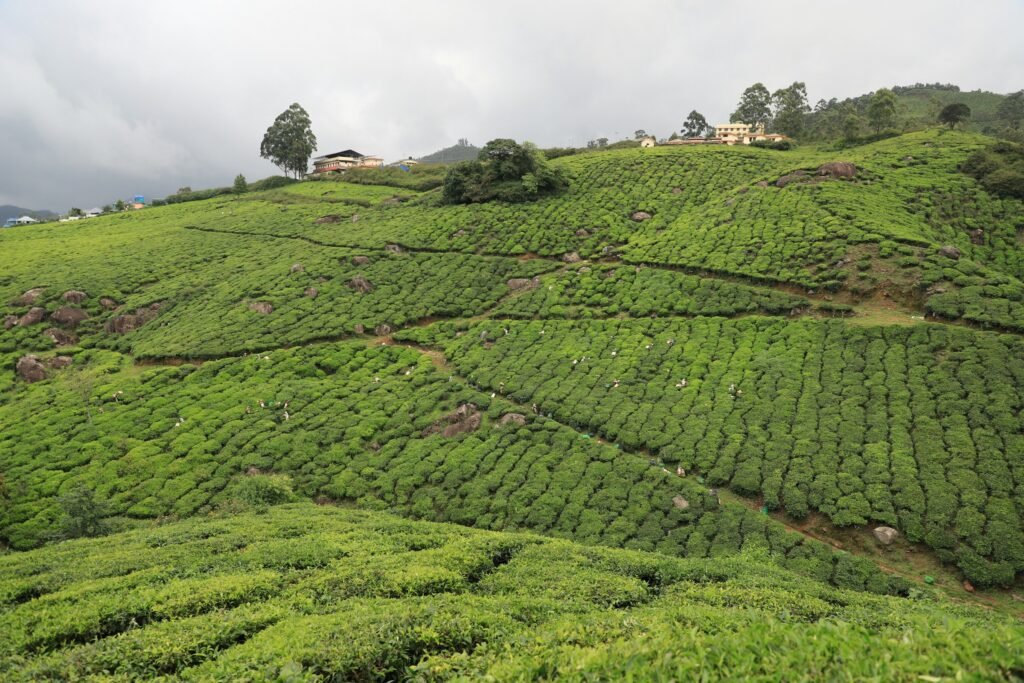
Tea gardens often operate under collective settlements and customary benefits that the Act preserves. Before any reduction, check the current settlement, the estate's service rules and any agreement with the union, because these may provide more generous terms or a different selection method than section 20(4).
Family businesses with owners abroad
Where a UK-based owner decides to close a Sylhet branch, the local manager is often left to communicate the decision. The notice, the inspector's copy and the payment still have to come from the employer, and the owner remains responsible for the money. A single written plan, approved by the owner and signed off before notices go out, avoids the most common mistakes.
Voluntary schemes and settlement agreements
Many employers prefer a voluntary separation package, offering more than the statutory minimum in exchange for a signed release. That is lawful if the worker genuinely agrees and the package is at least what the Act would give. A release that waives statutory retrenchment benefits for less money is vulnerable, because section 3 does not allow service terms that are less favourable than Chapter II. Good practice is to show the statutory calculation on the same sheet as the enhanced offer, so the worker can see the difference, and to give time for the worker to take advice.
Workers should check four things before signing: the start date used, the wage figure (basic plus dearness allowance), whether leave encashment and provident fund are listed separately, and the payment date. If anything is unclear, ask for it in writing before accepting the cheque.
Retrenchment compared with other exits
Employers sometimes mix up retrenchment with termination simpliciter under section 26 or with discharge. The differences affect both notice and money.
| Route | Ground | Notice | Money for permanent worker |
|---|---|---|---|
| Retrenchment (s.20) | Redundancy | One month, with copies to the inspectorate and CBA | 30 days' wages per year or gratuity, whichever higher |
| Termination by employer (s.26) | No reason required | 120 days (monthly-rated) or 60 days (others), or pay in lieu | 30 days' wages per completed year or gratuity, whichever higher, plus other benefits |
| Discharge (s.22) | Certified physical or mental incapacity | Not specified in s.22 | 30 days' wages per year or gratuity if one year's service |
| Dismissal (s.23) | Proven misconduct or criminal conviction | None, after inquiry | Limited; see our note on the misconduct inquiry |
Because section 26 notice is far longer, an employer facing a genuine redundancy will usually follow section 20 properly rather than use section 26. Workers whose employment is ended under section 26 can challenge it only on limited grounds, which section 33(9) sets out.
After the exit: rehiring, challenges and retrenchment benefits disputes
Section 21 gives retrenched workers a preference if the employer later recruits for similar work, so a business that retrenches in a lean season should keep the list of retrenched staff and their contact details. Re-hiring new people for the same posts without offering them first is a common source of complaints.
A worker who thinks the retrenchment was unfair, or that retrenchment benefits were miscalculated, starts with a written grievance to the employer within thirty days under section 33, and then may go to the Labour Court; our note on grievance notices and Labour Court claims explains the timetable. The court can order reinstatement, with or without back wages. Claims about unpaid sums can also be brought under section 213 to enforce a right under the Act.
Gratuity questions deserve their own analysis, especially for long-serving staff; see service benefits and gratuity. For a wider view of exits, including mutual separation agreements, read termination and employment disputes.
How TRW & Co helps with retrenchment
We help employers in Sylhet, Moulvibazar, Habiganj and Sunamganj plan a lawful restructuring: identifying categories, applying the selection rule, drafting notices and letters to the inspectorate, and preparing settlement sheets that show how retrenchment benefits were calculated. We also advise workers and their families who want a calculation checked or a grievance drafted. Owners based abroad can instruct us by email at info@trw.co, and our Sylhet office is at Surma Tower, opposite the Judge Court. For compliance more generally see Labour Act compliance, or contact us to discuss a specific situation.
Frequently asked questions
Does a worker with less than one year's service get retrenchment benefits?
Section 20(2) attaches the notice, inspector copy and compensation requirements to workers who have been in continuous service for at least one year. Section 14 treats a worker as having a year's service if he or she actually worked 240 days in the preceding twelve calendar months, counting certain leave and lay-off days. A shorter-serving worker is still owed earned wages and other accrued dues, and any contractual notice.
Which wage is used to calculate retrenchment compensation?
Section 14(3), as replaced by the Labour (Amendment) Act 2026, says that for compensation under section 20 'wages' means the last monthly basic wage plus dearness allowance and any ad hoc or interim wage. House rent, medical and conveyance allowances are generally not included unless they form part of those elements. Ask for the calculation in writing.
Can we choose which workers to retrench based on performance?
Section 20(4) says that, unless there is an agreement between employer and workers on the point, the employer must retrench the last person employed within the relevant category. Performance-based selection therefore needs a lawful agreement or must be handled through a different procedure. Selecting union officers or long-serving staff out of turn invites a Labour Court challenge.
How long does the employer have to pay?
Section 30 requires all dues to be paid within a maximum of thirty working days after employment ends for any reason, including retrenchment. Late payment can be raised through a grievance and Labour Court application. Employers should prepare the settlement sheet before the notice expires so that the cheque or bank transfer is ready on time.
Sources
- Bangladesh Labour Act 2006, section 20 (retrenchment)
- Bangladesh Labour Act 2006, section 14 (computation of one year and wages)
- Bangladesh Labour Act 2006, section 2 (definitions, including gratuity)
- Bangladesh Labour Act 2006, section 30 (time for final payment)
- Bangladesh Labour Act 2006, section 26 (termination by employer)
General information only, not legal advice. References to statutes, courts and authorities describe published law and practice at the date shown.
 Employment
Workplace Safety Committees Under the Labour Act
Any establishment with fifty or more workers must form and run a safety committee under section 90A of the Bangladesh Labour Act, rewritten in 2026. This… 8 min read
 Employment
Trade Unions in Tea Gardens and Factories After the 2026 Reforms
Since April 2026, at least 20 workers can apply to register a trade union in Bangladesh, membership minimums are scaled to workforce size, and anti-union discrimination… 8 min read
 Employment
Service Benefits and Gratuity Under the Labour Act
Gratuity under the Bangladesh Labour Act is at least thirty days' wages per year of service, or forty-five days after ten years, and on most exits… 8 min read