

Provident Funds and Workers' Participation Funds in Bangladesh
A provident fund is optional for most private employers in Bangladesh until two-thirds of a 100-strong permanent workforce demand one; profit-sharing for qualifying companies is not optional at all. Here is how both schemes work after the Labour (Amendment) Act 2026, with points specific to Sylhet businesses and tea estates.

Key takeaways
- Establishments with 100+ permanent workers must form a provident fund if two-thirds demand it in writing.
- Default contributions are 7–8% of basic wage from worker and employer alike, unless otherwise agreed.
- Enrolling willing staff in the Progoti universal pension scheme, 50:50, can replace the provident fund duty.
- Qualifying companies pay 5% of net profit within nine months of year end, split 80:10:10.
- Dismissal cannot strip a member's provident fund benefits, but forfeits the participation fund share.
- Tea estates fall under a separate statutory Tea Plantation Workers' Provident Fund.
The short answer on provident fund and profit-sharing duties
A provident fund under the Bangladesh Labour Act 2006 is voluntary for most private employers, but it becomes compulsory when an establishment has at least 100 permanent workers and two-thirds of them demand one in writing. Separately, a company that falls within Chapter XV of the Act must pay five per cent of its net profit each year into a workers' participation fund, a welfare fund and the government's Workers' Welfare Foundation Fund. The two schemes have different triggers, different trustees and different consequences when they are ignored.

This note sets out the rules as they stand on the Bangladesh Laws website, which now reflects the Bangladesh Labour (Amendment) Act 2026 (Act No. 43 of 2026). That Act, passed by Parliament in April 2026, converted the interim government's 2025 labour ordinance into law with changes, and it rewrote parts of section 264. Employers in Sylhet, Moulvibazar, Habiganj and Sunamganj who set up their schemes years ago should check them against the current text rather than an old handbook.
Two schemes compared side by side
Business owners often treat the two funds as one item on a compliance list. They are not. The table summarises the main differences as they appear in sections 232 to 252 (participation in company profits) and sections 264 to 273 (provident funds).
| Point | Provident fund (s.264) | Participation and welfare funds (Chapter XV) |
|---|---|---|
| Who must have one | Optional, but compulsory for establishments with 100+ permanent workers if two-thirds apply in writing | Companies with paid-up capital of at least Tk 1 crore, or fixed assets of at least Tk 2 crore, on the last day of the accounting year (s.232) |
| Money in | Worker and employer each pay 7–8% of monthly basic wage, unless otherwise agreed | Employer pays 5% of the previous year's net profit |
| Split | Individual accounts for each member | 80:10:10 between participation fund, welfare fund and the Workers' Welfare Foundation Fund |
| Who runs it | Trustee board with equal employer and worker members and a government-nominated chair | Trustee board with nominees of workers and management |
| Deadline | Rules within six months of a valid demand; fund running before that period ends | Funds set up within one month of the chapter applying; payment within nine months of year end |
| Alternative | Enrolment in the universal pension scheme "Progoti" can exempt the employer | None in the Act |
When a provident fund becomes compulsory
Section 264(1) says a private-sector establishment may form a provident fund for its workers. The fund is then constituted under service rules that the establishment itself frames under section 3, unless the government makes rules of its own, in which case those rules bind every establishment they cover.
The compulsory trigger sits in section 264(10), substituted by the 2026 amending Act. Where at least 100 permanent workers are employed, the employer must form one if not less than two-thirds of the workers submit a written application demanding it. Once that demand arrives, section 264(11) gives the employer six months to frame the necessary rules and to start the fund before the period ends.
The Progoti alternative
The same subsection offers a way out. An employer is released from the duty to form a provident fund if it institutionally ensures that staff who express interest in writing can join "Progoti", the universal pension scheme for private-sector employees introduced by the National Pension Authority. Contributions to the scheme are split 50:50 between employer and worker. If a worker declines membership in writing, the employer does not have to pay its half for that person.
If two-thirds of your permanent workforce sign a demand, start the clock that day. Decide quickly whether to build a fund with its own rules and a trustee board, or to enrol willing staff in Progoti, and record each worker's written choice. A missed six-month window is hard to explain to an inspector or a labour court.
Contributions, trustees and audit
Section 264(9) sets the default contribution. Every permanent worker who has completed one year of service pays into the fund each month at not less than seven and not more than eight per cent of monthly basic wage, unless a different agreement exists, and the employer pays at the same rate. The words "unless otherwise agreed" matter: a collective agreement or a well-drafted set of service rules can fix a different structure, but it should not leave workers worse off than the statute contemplates.
- Trustee board. The fund is run by a board with equal numbers of employer and worker representatives and a chair nominated by the government (s.264(4)–(5)).
- Worker trustees. They are nominated by the collective bargaining agent; where there is none, by the participation committee; and failing both, elected by the workers under the supervision of the Director General (s.264(6)–(7)).
- Term. Trustees serve two years and stay in office until successors take over (s.264(8)).
- Investment. The 2026 Act substituted s.264(12): at least half of the money may be invested in government-owned investment avenues.
- Costs and audit. The employer bears administration costs and pays for an annual audit; audited accounts go to the Director of Labour within a month of the audit report (s.264(13)–(15)).
Leaving the company: what happens to the money
Section 29 is short and important. A worker who is a member of a provident fund and entitled to benefits, including the employer's contribution, under the fund's rules cannot be deprived of them because of retrenchment, discharge, dismissal, retirement, removal, termination or death. Fund rules that claw back the employer's share on dismissal for misconduct are therefore vulnerable. Section 30 then governs the time for paying a departing worker's final dues, and section 270 protects the fund's money from attachment.
Profit-sharing works differently. Under section 242, the money credited to the participation fund each year is divided equally among all beneficiaries. A beneficiary who resigns still receives what is payable; one whose employment ends other than by dismissal is treated like a retiree; but a beneficiary who is dismissed forfeits his or her share in the two funds. When a family business in Sylhet dismisses a long-serving manager, that distinction often decides how much is really at stake.
Illustration (hypothetical): a Sylhet city hotel company has 120 permanent staff. A cook with six years' service is dismissed after a domestic inquiry. Her provident fund balance, including the employer's contributions, must be paid out under section 29. Her unpaid share in the participation fund for the current year, however, is forfeited under section 242(4) — provided the dismissal itself survives any challenge in the labour court.
Participation fund step by step
Under section 232, Chapter XV applies to a company or establishment that, on the last day of an accounting year, has paid-up capital of at least Tk 1 crore or fixed assets worth at least Tk 2 crore. The government can extend it to others by gazette notification, and 100 per cent export-oriented sectors can be moved to sector-wide central funds by rules. For a company inside the chapter, the sequence is:
- Set up the funds. Within one month of the chapter applying, establish a Workers' Participation Fund and a Workers' Welfare Fund (s.234(1)(a)).
- Constitute the trustee board. As soon as possible, appoint a board with two worker nominees (from the collective bargaining agent or participation committee, or elected by workers) and two management nominees (s.235).
- Calculate five per cent of net profit for the previous year, using the audited accounts.
- Pay it within nine months of year end in the ratio 80:10:10 to the participation fund, the welfare fund and the Workers' Welfare Foundation Fund under section 14 of the Bangladesh Workers' Welfare Foundation Act 2006 (s.234(1)(b)).
- Distribute and invest as the chapter requires, sharing participation fund money equally among beneficiaries each year (s.242(1)).
Many Sylhet companies are private limited companies owned by one family, sometimes with diaspora shareholders in London or Birmingham. Whether Chapter XV applies depends on the capital and asset tests, not on how the business sees itself. A hotel or tea-processing company that revalues its land or builds a new wing can cross the Tk 2 crore fixed-asset line without anyone noticing, so test the latest audited figures each year.
Tea gardens have their own provident fund
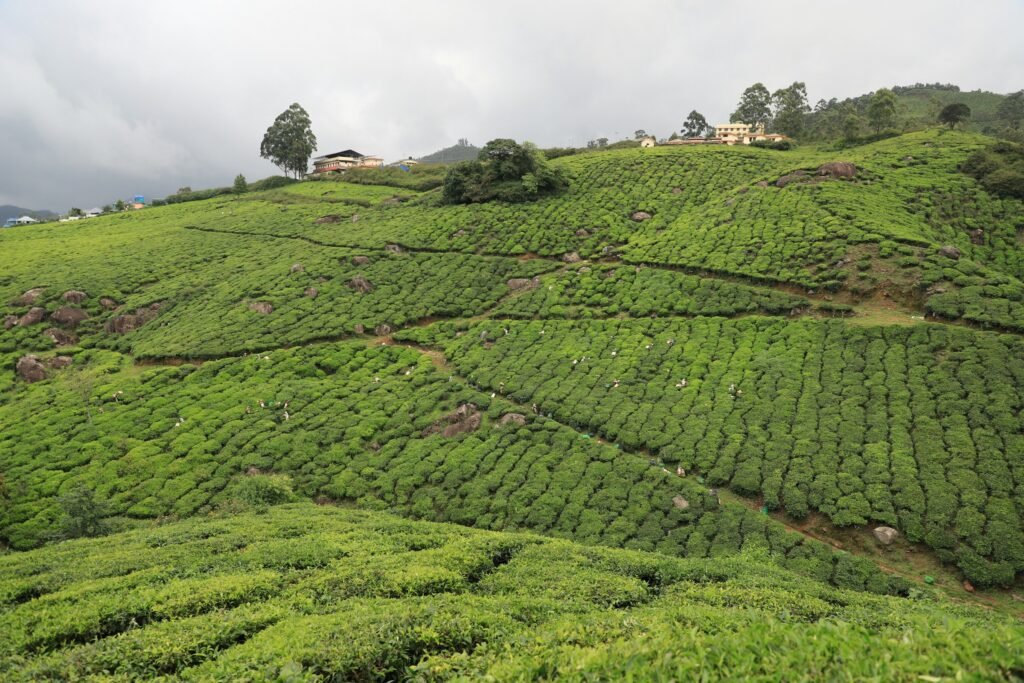
Tea plantations are treated separately. Section 265 establishes the Tea Plantation Workers' Provident Fund, vested in and administered by a trustee board constituted under section 266, with a statutory Controller under section 320. For tea estates in Moulvibazar, Habiganj and Sylhet, this means the general section 264 machinery is not the starting point: estate managers should look at the tea plantation provisions and the rules made under them, and keep contribution records that can be reconciled with the trustee board's statements.
Misappropriating money held in such a fund, or trade union money, is an offence under section 298. Directors and managers who sign off on delayed transfers, or who use deductions from wages as working capital, take a personal risk as well as a corporate one.
Gaps that often appear in fund rules
Many schemes in the region were set up on borrowed templates. When we review them, the same weaknesses tend to recur, and each one becomes expensive when a worker leaves or an inspector asks for the papers.
- No trustee board in practice. The rules name trustees, but the board never meets, no minutes exist and the government-nominated chair was never requested.
- Eligibility drafted too narrowly. The statutory contribution duty attaches to permanent workers after one year's service; rules that exclude workers on a technicality invite claims.
- Forfeiture clauses. Clauses removing the employer's share on dismissal sit uneasily with section 29 and should be revisited.
- Money left in the operating account. Deductions are taken from wages but not transferred, which exposes managers under section 298.
- No audit trail. Annual audits and the filing with the Director of Labour are skipped, so there is nothing to show when a dispute starts.
- Nominations missing. Without a written nomination, payment to a deceased worker's family can stall while heirs obtain a succession document.
Fixing these points before a dispute is far cheaper than defending them before a labour court. A short rules review, a trustee meeting with minutes and a reconciliation of every member's balance usually closes most of the gap.
How TRW & Co helps employers and workers
We advise employers in the Sylhet division on whether the provident fund and participation fund rules apply, draft or update provident fund rules and trust deeds, and set up trustee boards and payment calendars that match the 2026 text. We review collective agreements, check the Progoti route against your workforce profile, and prepare for questions from the Department of Inspection for Factories and Establishments. We also act for workers and their families on unpaid fund balances. Our Sylhet office is at Surma Tower, opposite the Judge Court; owners based abroad can instruct us by email at info@trw.co. For wider compliance, see our pages on Labour Act compliance, termination and disputes and tea garden labour, and our notes on gratuity and retrenchment benefits. To discuss a scheme, contact us.
Primary texts: section 264, section 29, section 234 and section 242 of the Bangladesh Labour Act 2006.
Frequently asked questions
Is a provident fund mandatory for every private company in Bangladesh?
No. Section 264 lets private establishments form one voluntarily. It becomes compulsory where at least 100 permanent workers are employed and not less than two-thirds of the workers apply in writing. Even then, the employer can be exempt if it ensures that interested staff can join the Progoti universal pension scheme, with contributions split equally between employer and worker.
How much do workers and employers contribute?
Under section 264(9), a permanent worker who has completed one year of service contributes not less than seven and not more than eight per cent of monthly basic wage, and the employer contributes at the same rate. The section allows a different arrangement by agreement, so check your collective agreement or service rules before assuming the default applies.
Can an employer keep its contributions if a worker is dismissed?
Section 29 says a member entitled to benefits under the fund rules, including the employer's contribution, cannot be deprived of them because of retrenchment, discharge, dismissal, retirement, removal, termination or death. Rules that claw back the employer's share on dismissal are therefore open to challenge. The participation fund is different: a dismissed beneficiary forfeits that share.
Which companies must pay into the workers' participation fund?
Companies to which Chapter XV applies under section 232 of the Labour Act. They must set up the participation and welfare funds within a month of the chapter applying, then pay five per cent of the previous year's net profit within nine months of each year end, split 80:10:10 with the Workers' Welfare Foundation Fund. Test the conditions against each year's audited accounts.
Do tea gardens follow the same provident fund rules?
Not exactly. Section 265 sets up a separate Tea Plantation Workers' Provident Fund, managed by a trustee board under section 266 and overseen by a Controller under section 320. Tea estates in Moulvibazar, Habiganj and Sylhet should work from those provisions and the rules made under them, rather than the general section 264 scheme.
Sources
- Bangladesh Labour Act 2006, section 264 (provident fund or universal pension scheme)
- Bangladesh Labour Act 2006, section 29 (payment of provident fund)
- Bangladesh Labour Act 2006, section 234 (participation fund and welfare fund)
- Bangladesh Labour Act 2006, section 242 (use of participation fund)
- Bangladesh Labour Act 2006, section 265 (Tea Plantation Workers' Provident Fund)
General information only, not legal advice. References to statutes, courts and authorities describe published law and practice at the date shown.
 Employment
Workplace Safety Committees Under the Labour Act
Any establishment with fifty or more workers must form and run a safety committee under section 90A of the Bangladesh Labour Act, rewritten in 2026. This… 8 min read
 Employment
Trade Unions in Tea Gardens and Factories After the 2026 Reforms
Since April 2026, at least 20 workers can apply to register a trade union in Bangladesh, membership minimums are scaled to workforce size, and anti-union discrimination… 8 min read
 Employment
Service Benefits and Gratuity Under the Labour Act
Gratuity under the Bangladesh Labour Act is at least thirty days' wages per year of service, or forty-five days after ten years, and on most exits… 8 min read