

Sand Quarry Leases Under the Balumahal Act
A sand quarry lease gives a bidder one Bangla year to extract sand from a government balumahal, but the 2023 amendment fenced that right with buffers, monitoring and tougher sanctions. This note explains how leases are granted in the Sylhet division, where extraction is banned and what happens when things go wrong.
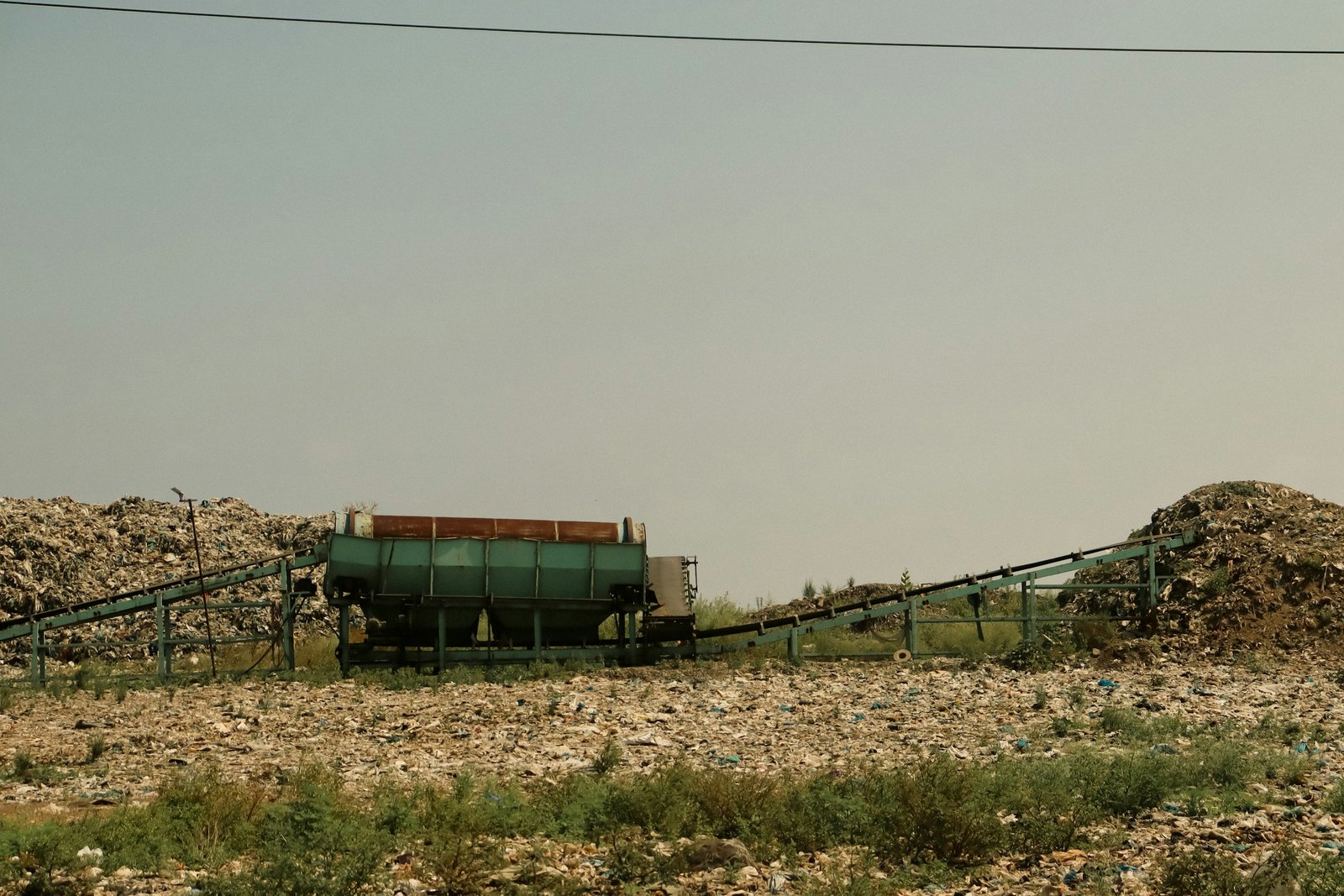
Key takeaways
- A sand quarry lease runs one Bangla year, 1 Baishakh to 30 Chaitra.
- Possession follows only after full lease money, income tax and VAT are paid.
- Extraction is banned within at least 1 km of bridges, embankments, roads and settlements.
- Tea gardens, hills, tilas and ecologically critical areas are protected.
- Breach can mean cancellation, blacklisting and confiscation of dredgers and vehicles.
How a sand quarry lease works
A sand quarry lease is a one-year right, granted by the Deputy Commissioner (DC) through the district sand-quarry (balumahal) management committee, to extract and sell sand or soil from a government-owned site that the DC has declared a balumahal. The governing law is the Sand Quarry and Soil Management Act 2010 (Balumahal o Mati Byabosthapona Ain), substantially rewritten by the Sand Quarry and Soil Management (Amendment) Act 2023, Act No. 35 of 2023, published in the Bangladesh Gazette on 18 September 2023. The lease runs for the Bangla year, from 1 Baishakh to 30 Chaitra, and possession is handed over only after the full lease money, income tax and VAT have been paid.

In the Sylhet division, where rivers flowing down from the Meghalaya hills carry large volumes of sand and stone, sand extraction is a significant local business and a frequent source of conflict. The 2023 amendment responded to years of complaints about riverbank erosion, damaged bridges and unregulated dredging. Anyone bidding for a sand quarry lease, financing a lessee or owning land near a river should understand the post-2023 rules.
What is a balumahal?
As substituted in 2023, section 2(7) defines a balumahal as an open place, a tea-garden chhara (stream) or a riverbed in government ownership that contains extractable sand or soil and that the DC has declared to be a balumahal under the Act, provided that extraction can be done while keeping the environment intact. Three consequences follow:
- Only government-owned sites can be balumahals; extraction from private land is governed separately by section 7A.
- No site is a balumahal until the DC declares it, so extracting from an undeclared riverbed is unlawful even if the sand is plentiful.
- Under the amended section 9, the DC can propose to the Divisional Commissioner that a balumahal be de-listed — for instance where no extractable sand remains, extraction would harm the environment, biodiversity or important installations, or no suitable road exists to carry the sand.
The amended section 9 also brings in the Bangladesh Inland Water Transport Authority (BIWTA): outside port limits, a hydrographic survey by BIWTA is used to assess whether sand can be taken from a navigation route, with the Water Development Board or another government agency stepping in where BIWTA cannot do so.
Where a sand quarry lease cannot authorise extraction
The substituted section 4 is the core of the 2023 reforms. It prohibits extraction for sale from a government open place, tea-garden chhara or riverbed in any of the following cases:
| Restricted situation | Section 4 clause |
|---|---|
| The site is an ecologically critical area under the Environment Conservation Act 1995 | (ka) |
| Within at least 1 km of a bridge, culvert, dam, barrage, embankment, road, highway, forest, railway line, other important public or private installation or residential area, or inside a boundary set by the relevant authority | (kha) |
| Dredging would erode a riverbank | (ga) |
| Dredging is likely to damage a gas line, power line, sewerage line or other important line | (gha) |
| The area adjoins Water Development Board structures for flood control, drainage, irrigation or erosion protection | (uma) |
| A tea garden, hill or tila is likely to be damaged | (cha) |
| The river's landform, ecology, biodiversity, fisheries, aquatic or terrestrial life, cropland or vegetation is or may be harmed | (chha) |
| BIWTA's navigation channel would be affected | (ja) |
| The area falls within limits set by government gazette notification | (jha) |
These restrictions apply whether or not a sand quarry lease exists. A lease cannot authorise extraction that section 4 forbids, and a lessee who strays into a restricted zone commits an offence. In the Sylhet context, the tea-garden and hill clauses are particularly relevant around Sreemangal, Kamalganj and Jaintiapur, and the 1 km buffer around bridges and embankments catches many traditional extraction points on rivers flowing towards the haors.
Bidding, payment and possession
The amendment strengthened the financial and monitoring side of a sand quarry lease:
- Online leasing. The government may direct that the leasing process be run online (amended section 10(8)).
- Eligibility. A person or firm blacklisted under section 14(1) cannot take part in the open tender (proviso to section 10(4)).
- Payment before possession. Possession is handed over only after the full lease price and the government-set income tax and VAT on it have been paid (section 10(7)).
- Security. The government may require additional security from the lessee, forfeitable for breach of conditions.
- Monitoring. Directions may require satellite data, CCTV cameras and six-monthly digital surveys to monitor the volume extracted, and pre- and post-lease hydrographic surveys.
- Damage recovery. Directions may set out how damage caused by illegal or excessive extraction — erosion, damaged houses, installations, trees or crops — is assessed and recovered from the lessee's security.
If no lease can be granted for a balumahal, section 11 as substituted allows the government to collect revenue directly through khas collection — extraction, transport and sale under rules — rather than leaving the site to informal operators.
Bid only after you have walked the boundaries of the balumahal with the schedule in hand and measured the distance to the nearest bridge, embankment, road and village. A sand quarry lease for a site where most of the sand lies inside a 1 km buffer has little commercial value, and the lease money is not automatically refunded.
A checklist for bidders and financiers
Whether you are bidding yourself or lending to a bidder, the following questions should be answered in writing before money moves:
- Is the site formally declared a balumahal, and does the tender schedule match the declaration (mouza, dag numbers and boundaries)?
- Has a hydrographic survey been carried out, and does it show extractable sand outside the restricted zones in section 4?
- Where exactly are the nearest bridge, culvert, embankment, road, railway, residential area, forest, tea garden and hill, and how much of the site lies inside a 1 km buffer?
- Does the site touch an ecologically critical area or a navigation channel?
- What security, monitoring equipment (CCTV, surveys) and reporting will the lease conditions require, and who pays for them?
- Is there a usable road to carry sand out, and who maintains it? The amended section 9 lets the DC propose de-listing where transport would damage public roads and the lessee will not repair them.
- Are there pending writs, objections or erosion complaints about the site from previous years?
A financier should also take security over the lessee's rights only to the extent the lease allows, and should remember that a sand quarry lease ends with the Bangla year: there is no automatic renewal, and the asset disappears if the next tender is lost.
Erosion claims and disputes with neighbours
Riverside households and farmers are often the first to suffer when extraction goes wrong. The 2023 amendment gives them more to work with. Directions under section 10(8) may set out how damage from illegal or excessive extraction — erosion, destroyed homes, installations, trees or crops — is assessed and paid from the lessee's security. Where extraction breaches section 4, a complaint to the DC, the upazila nirbahi officer or the Department of Environment can lead to suspension, cancellation and prosecution. Civil claims for damages and injunctions remain available in the ordinary courts, and in serious cases affected communities have used writ petitions to require authorities to act.
For the lessee, the best defence is a record: survey data, CCTV footage and extraction logs showing that work stayed within the lawful area and volume. A lessee who cannot produce that record will struggle to answer a neighbour's photographs of a collapsing bank.
Cancellation, blacklisting and penalties
Under the substituted section 14, if the lessee fails to pay the lease money, tax and VAT on time, or breaches any lease condition, the DC may, after giving the lessee a chance to show cause, cancel the lease and blacklist the lessee for a period and on terms set by rules. When a lease is cancelled, the security is forfeited. If the lessee had already taken possession, the district committee may recommend refunding the balance of the lease price after deducting a proportionate amount for the sand already extracted.
Section 15, as amended, makes breaches of sections 4 and 5 offences and adds that dredgers, sand- or soil-carrying vehicles and related equipment used in the offence will be confiscated to the government. Extraction inside an ecologically critical area may also be prosecuted under the Environment Conservation Act 1995, whose penalty table provides up to two years' imprisonment or a Tk 2 lakh fine for a first offence and heavier penalties for repeats.
Private land, stockpiles and government projects
The 2023 amendment also reaches beyond balumahals:
- Private land (section 7A). Sand or soil may not be extracted from privately owned land if it is fertile agricultural land, if the purpose is commercial, if it would destroy the fertile topsoil, if it would harm the environment, ecology or biodiversity, or if dredgers or other methods would cause neighbouring land to subside or collapse. An owner may, with the permission of the upazila nirbahi officer, extract a limited amount from their own land to build a homestead or for their own needs.
- Stockpiles (section 7B). Lessees may not dump sand on public roads, roadsides, playgrounds, parks or open spaces in a way that obstructs movement, and may not stockpile on someone else's land, government land or the grounds of an institution without permission.
- Government projects (section 7). Public works that need sand or soil require prior approval, and authorities planning river, khal or beel dredging must inform the Ministry of Land, the Divisional Commissioner and the DC before the project is approved, so the area can be kept out of leasing.
Illustration (hypothetical): a family in Luton owns riverside land in Companiganj that a local trader offers to "lease" for sand extraction. Because the land is private, a balumahal lease is irrelevant; section 7A applies, and commercial extraction from it is prohibited. The family should refuse, and if extraction is already happening, document it and seek advice, as both the trader and the landowner may face liability and the land may be permanently damaged.
How TRW & Co helps
We advise bidders, lessees, financiers and riverside landowners on sand quarry lease terms, section 4 restrictions and compliance, and we review tender documents and lease conditions before bids are submitted. We act for clients in cancellation and blacklisting proceedings, in disputes over erosion damage, and in prosecutions under the Balumahal Act and the 1995 Act. Our pages on stone and sand quarrying and khas, haor and government land give the wider context, and our note on stone extraction at Jaflong and Bholaganj covers the stone side. Clients abroad can instruct us by email at info@trw.co; our Sylhet office is at Surma Tower, opposite the Judge Court. Please contact us.
Frequently asked questions
How long does a sand quarry lease last?
One year. Section 13 of the Sand Quarry and Soil Management Act 2010, as substituted in 2023, fixes the lease period as one Bangla year, from 1 Baishakh to 30 Chaitra. A new lease must be won for each year, usually through an open tender run by the district administration.
Who grants a sand quarry lease in Sylhet?
The Deputy Commissioner of the district, working with the district sand-quarry management committee, declares balumahals and leases them. If a site cannot be leased, the government may collect revenue through khas collection under section 11. De-listing a balumahal requires a proposal from the DC to the Divisional Commissioner.
Can I sell sand from my own riverside land?
Usually not. Section 7A, added in 2023, prohibits extraction from private land for commercial purposes, from fertile agricultural land, or where it would damage the environment or neighbouring land. With the upazila nirbahi officer's permission, a limited quantity may be taken for your own homestead or needs.
What happens if a lessee breaches the lease?
After a show-cause opportunity, the DC may cancel the lease and blacklist the lessee under section 14, and the security is forfeited. Offences under sections 4 and 5 are punishable under section 15, and dredgers and vehicles used may be confiscated. Damage claims may be recovered from the lessee's security.
Sources
General information only, not legal advice. References to statutes, courts and authorities describe published law and practice at the date shown.
 Energy and environment
Environmental Court Cases in Sylhet
Hill cutting, stone lifting and pollution cases in Sylhet are heard under the Environment Court Act 2010. This guide explains how the environment court and Special… 8 min read
 Energy and environment
Working as a Contractor on Gas Field Projects
Gas fields in the Sylhet division create work for civil, transport, supply and service businesses, but the rules differ depending on whether the client is a… 8 min read
 Energy and environment
Tree Felling and Forest Land Restrictions in Sylhet
The Forest and Tree Conservation Act 2026 brought tree felling on private land under regulation for the first time, alongside tighter controls on forests and public… 8 min read