

Jaflong and Bholaganj: The Legal Position on Stone Extraction
Stone extraction has shaped Jaflong and Bholaganj for generations, but in 2026 it sits under mineral licensing rules, an ecologically critical area, court proceedings and repeated enforcement drives. This note explains the legal position, who is exposed and the checks investors, traders and landowners should make.
Key takeaways
- Stone is a mineral under the 1992 Act; extraction needs a licence or lease under the rules.
- The Jaflong–Dawki ECA covers a 500-metre belt on each bank, 14.93 sq km in all.
- ECA breaches carry up to 2 years' imprisonment or a Tk 2 lakh fine for a first offence.
- Bholaganj saw major illegal removal and enforcement in 2025, with High Court proceedings.
- Buyers of stone and crushers should insist on leases, clearances and source documents.
Where stone extraction at Jaflong and Bholaganj stands in 2026
Stone extraction at Jaflong and Bholaganj is lawful only where it is carried out under a valid mineral lease or permission granted under the mines and minerals legislation, outside any area where an ecologically critical area (ECA) notification or a court order forbids it, and with the environmental approvals the project requires. In practice, for much of the past decade lawful extraction at the main Sylhet quarries has been suspended or tightly restricted, while illegal stone extraction has continued and drawn repeated enforcement drives, criminal cases and High Court proceedings. Anyone buying stone, investing in crushers or holding land in these areas should start from the assumption that extraction is unlawful unless they can see the lease and the permissions in writing.
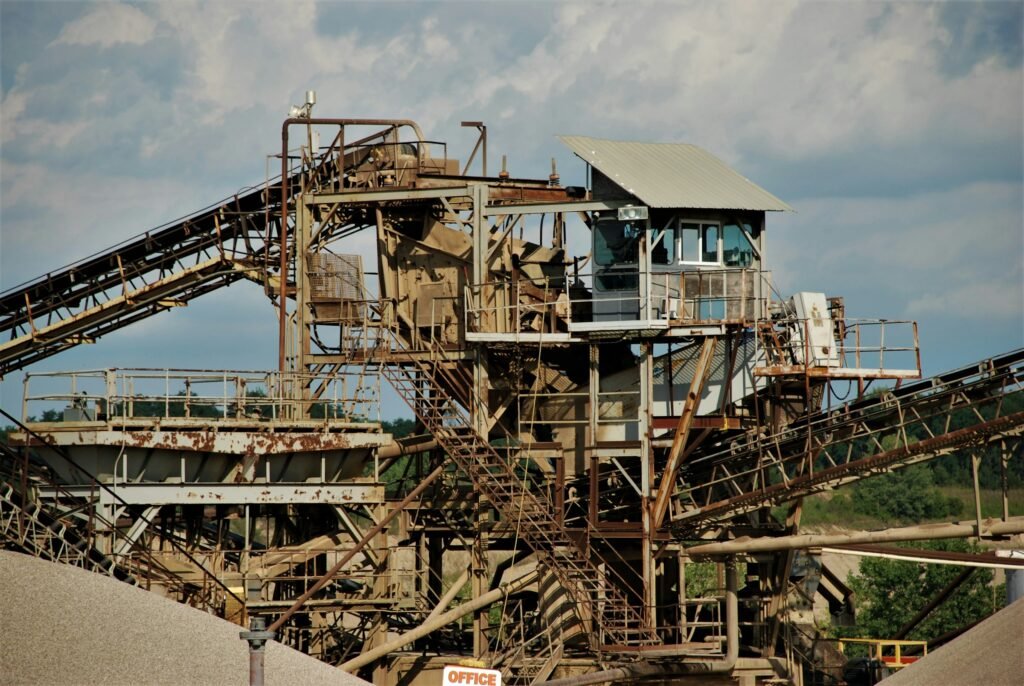
Jaflong, in Gowainghat upazila, and Bholaganj, in Companiganj upazila, sit where rivers leave the Meghalaya hills and drop boulders and gravel onto the Bangladesh side. For generations local labourers have collected that stone by hand, and in recent decades excavators, dredgers and crushers have turned it into a large industry. That industry now sits inside a dense web of legal rules, and those rules — not local custom — decide who may extract, where and how.
The legal framework for stone extraction
Four bodies of law apply, and an extractor must satisfy all of them:
| Source of law | What it does | Key point for Sylhet |
|---|---|---|
| Mines and Minerals (Regulation and Development) Act 1992 | Defines minerals to include sand, gravel, stone or rock used whole, broken or in slabs; licences and leases may be granted only under rules made under the Act (s.3) | Quarry stone is a mineral resource; there is no lawful extraction outside the rules |
| Rules under the 1992 Act | Set the procedure, conditions, royalty, cancellation and the seizure of illegally extracted minerals (s.4) | Breach of the rules can carry up to three years' imprisonment and a fine (s.5) |
| Environment Conservation Act 1995 | ECA declarations (s.5), hill-cutting ban (s.6B), environmental clearance (s.12) | The Jaflong–Dawki river belt is an ECA where listed activities are banned |
| Court orders | High Court Division directions in public-interest writs | Can suspend extraction or require enforcement regardless of leases |
The Bureau of Mineral Development is the specialist government agency for mineral leasing, and it is represented on the Jaflong–Dawki ECA management committee. Sand, as distinct from stone, is governed mainly by the Sand Quarry and Soil Management Act 2010 (Balumahal Act), as amended in 2023; mixed sand-and-stone sites can therefore engage both regimes. Our note on sand quarry leases under the Balumahal Act covers the sand side.
Jaflong: the ECA and its consequences for stone extraction
At Jaflong, the decisive fact is the ECA. A Ministry of Environment and Forest order dated 20 October 2016, published in the Bangladesh Gazette on 14 November 2016, records that a 500-metre strip along both banks of the Jaflong–Dawki river, together with the Khasia punji between the Jaflong–Dawki and Piyain rivers — 14.93 square kilometres in all — has been declared an ECA, and sets up a management committee chaired by the Divisional Commissioner. A High Court Division judgment of 24 August 2025 on another river (Writ Petition No. 8325 of 2014) also refers to the earlier writ proceedings in which the Jaflong–Dawki ECA was addressed.
Inside an ECA, any activity listed as prohibited in the declaration may not be started or continued (section 5(4) of the 1995 Act). Breach carries, for a first offence, up to two years' imprisonment, a fine up to Tk 2 lakh, or both, and for later offences two to ten years and fines of Tk 2 lakh to Tk 10 lakh (section 15, item 2). Machinery and vehicles used can be confiscated under section 15B. Mechanised stone extraction within the ECA belt is therefore exposed on two fronts: as a mineral offence if unlicensed, and as an ECA offence regardless of licence.
Bholaganj and the 2025 enforcement drive
Bholaganj's quarry, including the well-known Sada Pathor (white stone) area, has a different history. It is not covered by the Jaflong–Dawki ECA order we have seen. Its legal position depends on the mineral leasing decisions of the government, on the restrictions imposed since the late 2010s on extraction from Sylhet quarries, and on court proceedings.
During 2025 there were widespread reports of large-scale illegal removal of stone from Sada Pathor, followed by recovery drives, criminal cases naming large numbers of people and, in August 2025, a High Court rule reportedly asking why destructive extraction at Jaflong, Bholaganj, Shah Arefin Tila, Bichnakandi, Utmachhara, Sreepur and Lovachhara should not be declared illegal and why those areas should not be made ECAs.
Reports in May 2026 indicated that the Department of Environment was preparing technical work towards new ECA declarations in the area. We have not seen a gazette declaring them; check before relying on either position.
Stone recovered in enforcement drives, and stone found without lawful paperwork, can be seized and disposed of by the authorities under the mineral rules. If you are offered quarry stone at an unusually low price in Companiganj or Gowainghat, ask for the lease, the royalty receipts and the transport documents. Without them, you may be buying evidence in a criminal case.
Who is legally exposed
Stone extraction cases rarely stop at the person holding the shovel. The people most often exposed are:
- Extractors and machine owners — for unlicensed extraction, ECA breaches and hill cutting where tilas are dug, with confiscation of excavators, dredgers and boats.
- Crusher owners — crushers are industrial units needing a trade licence and an environmental clearance, and they are commonly targeted when they process stone from illegal sources. Our note on environmental clearance categories explains the clearance route.
- Traders and transporters — for possessing or moving minerals without lawful documents.
- Landowners — where extraction takes place on or through their land with their consent, and where they receive payment.
- Officials — in some cases, for failing to act, through departmental and anti-corruption proceedings.
Labourers who collected stone by hand for generations are among the most affected by restrictions, and the policy debate about livelihoods continues. That debate does not change the legal position for an individual case: the question is always whether the specific extraction was authorised.
Due diligence for investors, buyers and landowners
If you are considering investment in a crusher, a stone-trading business or land near the quarries, the following checks are essential:
- Lease and permissions. Obtain copies of any mineral lease or permission, its area schedule and expiry, and confirm with the issuing authority that it is in force and not suspended.
- ECA and court status. Confirm whether the site lies in the Jaflong–Dawki ECA belt or any newly declared ECA, and whether any court order affects it.
- Environmental clearance. For crushers and processing yards, check the site and environmental clearance and their conditions.
- Source of stone. For traders, insist on documents tracing stone to a lawful source — whether a domestic lease or a lawful import through a land port.
- Land records. For landowners, check that the land is not khas, forest or recorded tila, and that no one is extracting through it without consent.
Imported stone is a lawful alternative for many buyers; our note on importing coal and stone through Tamabil explains that route. For the broader regime, see our page on stone and sand quarrying.
Illustration (hypothetical): two cousins, one in Leicester and one in Companiganj, plan to buy a stone crusher in Companiganj from an owner who wants to exit. The crusher's trade licence is current, but its environmental clearance lapsed two years ago, and its stock yard holds several thousand cubic feet of stone with no source documents. The buyers should not take over the stock, should make completion conditional on a fresh clearance, and should require the seller to indemnify them for past breaches. Otherwise they risk inheriting both the seizure and the prosecution.
Responding to a seizure, notice or case
Enforcement around the quarries tends to move quickly: a drive by the district administration, police and other agencies, seizure of stone, boats or machines, and then criminal cases filed against named and unnamed people. If you or your business are caught up in one, the order of steps matters:
- Secure the documents. Gather the lease or permission, royalty and tax receipts, purchase invoices, import documents, environmental clearance and trade licence before anything else.
- Get the seizure list. Obtain a copy of the seizure list and any case reference, and check that quantities and items are correctly recorded.
- Identify the proceedings. Establish whether the matter is an administrative notice, a DoE direction, a mineral-rules case or a criminal case under the Penal Code or the 1995 Act, because each has a different forum and timetable.
- Apply for release where justified. Where stone or equipment was lawfully held, an application for release, supported by the documents, may be made to the authority or court holding it.
- Use statutory appeals. A DoE notice, order or direction can be appealed within thirty days under section 14 of the 1995 Act.
Where a business has a sound documentary trail, these steps can often separate it from the wider allegations. Where it does not, early advice on exposure and on cooperating with the authorities is essential.
A note on land, sand and mixed sites
Riverbeds and banks around Bholaganj and Jaflong are frequently khas land, and private claims to them should be examined carefully. Where sand and stone occur together, the 2023 amendment to the Balumahal Act adds further limits: extraction for sale is barred inside ECAs and within at least one kilometre of bridges, embankments, roads, settlements and other important installations, and where tea gardens, hills or tilas are likely to be damaged (section 4 as substituted by the 2023 amendment). Those buffers often overlap with the quarry areas, so a site that seems to fall outside the ECA may still be closed to extraction under the sand rules.
A landowner approached by an extractor should therefore refuse consent unless the extractor can show a lease, the relevant permissions and written confirmation that the site lies outside every restricted zone.
How TRW & Co helps
We advise investors, traders, crusher owners and landowners on the legal position of stone extraction at specific sites, carry out due diligence on leases, clearances and stock, and draft acquisition and supply agreements with appropriate protections. We represent clients in seizure and confiscation matters, prosecutions and writ proceedings in Sylhet and in the High Court Division. Clients abroad can instruct us by email at info@trw.co; our Sylhet office is at Surma Tower, opposite the Judge Court. Please contact us to discuss a site or transaction.
Frequently asked questions
Is stone extraction at Jaflong legal in 2026?
Only where a valid lease or permission exists under the mines and minerals rules and the activity is not prohibited by the Jaflong–Dawki ECA declaration or a court order. Much of the river belt lies inside the ECA. In practice, treat any extraction there as unlawful unless you have seen the documents and confirmed them with the authorities.
What law governs stone quarries in Bangladesh?
The Mines and Minerals (Regulation and Development) Act 1992, which defines minerals to include stone, gravel and rock, and the rules made under it. The Environment Conservation Act 1995 adds ECA restrictions, hill-cutting rules and the clearance requirement, and sand at mixed sites falls under the Balumahal Act.
What are the penalties for illegal stone extraction?
Under section 5 of the 1992 Act, breaching the mineral rules can carry up to three years' imprisonment and a fine. Inside an ECA, section 15 of the 1995 Act provides up to two years or a Tk 2 lakh fine for a first offence and up to ten years or Tk 10 lakh for repeats. Equipment may be confiscated.
Can I safely buy stone from Bholaganj traders?
Only with documents tracing the stone to a lawful source, such as a valid lease with royalty receipts or a lawful import through a land port. Stone without lawful paperwork can be seized, and buyers may be drawn into criminal cases. Unusually low prices are a warning sign.
Sources
- Mines and Minerals (Regulation and Development) Act 1992 (bdlaws)
- Bangladesh Environment Conservation Act 1995 (bdlaws)
- Jaflong–Dawki river ECA management committee order, Bangladesh Gazette, 14 November 2016
- High Court Division, Writ Petition No. 8325 of 2014, judgment of 24 August 2025
- Sand Quarry and Soil Management (Amendment) Act 2023, Bangladesh Gazette, 18 September 2023
General information only, not legal advice. References to statutes, courts and authorities describe published law and practice at the date shown.
 Energy and environment
Environmental Court Cases in Sylhet
Hill cutting, stone lifting and pollution cases in Sylhet are heard under the Environment Court Act 2010. This guide explains how the environment court and Special… 8 min read
 Energy and environment
Working as a Contractor on Gas Field Projects
Gas fields in the Sylhet division create work for civil, transport, supply and service businesses, but the rules differ depending on whether the client is a… 8 min read
 Energy and environment
Tree Felling and Forest Land Restrictions in Sylhet
The Forest and Tree Conservation Act 2026 brought tree felling on private land under regulation for the first time, alongside tighter controls on forests and public… 8 min read